


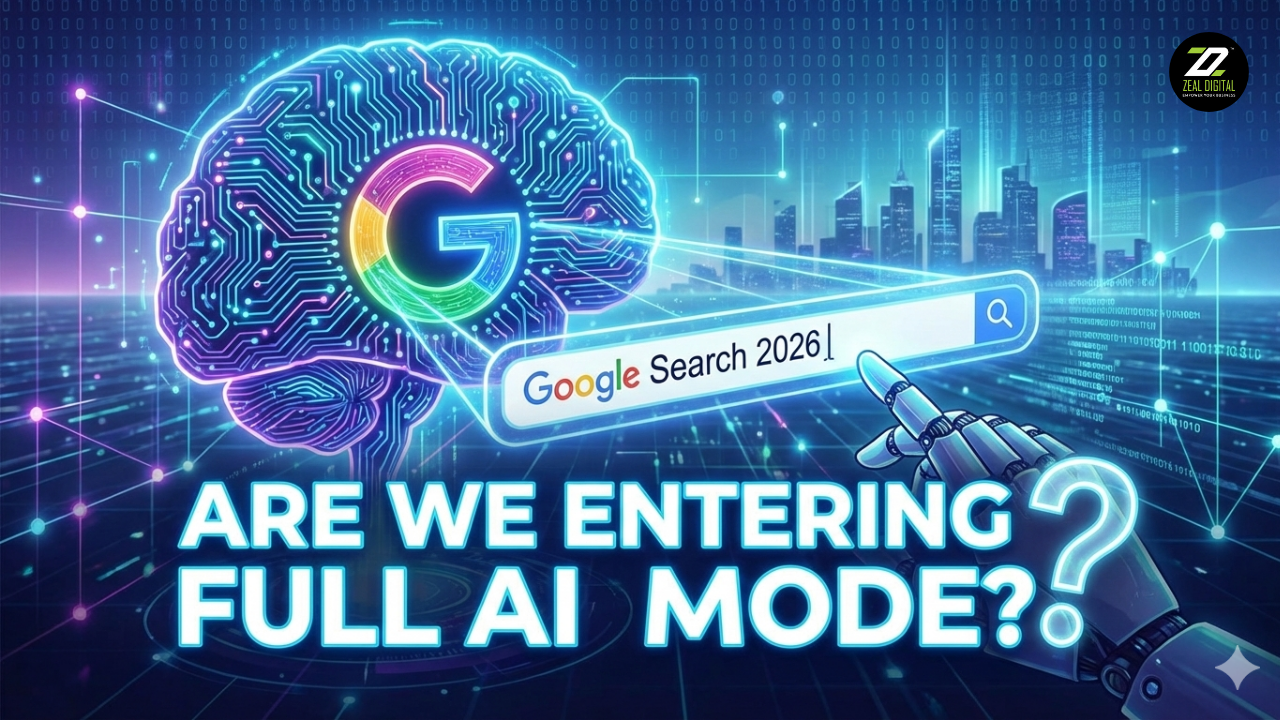
Google Search has undergone countless changes over the past two decades, but none have been as transformative as the rise of artificial intelligence. By 2026, it is clear that Google is no longer simply experimenting with AI; it is actively redefining how search works. The question many businesses are now asking is whether Google has entered “full AI mode”, and what this means for visibility, traffic and long-term digital strategy.
Search is no longer just about typing a query and receiving a list of links. Google is increasingly acting as an answer engine, powered by AI systems that understand language, context and intent with remarkable accuracy. This shift marks a defining moment for businesses that rely on organic search to reach their audiences.
The Evolution of Google Search Towards AI
Google has always aimed to deliver the most relevant results, but AI has fundamentally changed how that goal is achieved.
From Algorithms to Intelligence
Earlier search updates focused on rules-based algorithms, such as keyword relevance and backlinks. In contrast, modern AI-driven systems:
- Interpret the meaning behind search queries
- Understand relationships between topics and concepts
- Learn from user behaviour over time
This evolution allows Google to move beyond static rankings and provide more nuanced, context-aware responses.
What “Full AI Mode” Really Means
Entering full AI mode does not mean Google has abandoned traditional search. Instead, it means AI is now embedded across the entire search experience.
How AI Shapes Search Results
AI influences:
- How queries are interpreted
- Which sources are considered trustworthy
- How information is summarised and displayed
Rather than simply ranking pages, Google increasingly synthesises information from multiple sources to deliver direct answers. This represents a shift from discovery-based search to decision-based search.
AI Overviews and the Changing SERP Experience
One of the most visible signs of Google’s AI-first approach is the introduction of AI-generated overviews within search results.
How AI Overviews Work
These overviews:
- Summarise information directly on the results page
- Pull insights from multiple trusted sources
- Reduce the need for users to click through several websites
While this improves user convenience, it also changes how traffic flows to websites.
What This Means for Businesses
Businesses must now focus on:
- Being selected as a source for AI summaries
- Building authority that AI systems recognise
- Providing content that is clear, accurate and well-structured
Visibility within AI-generated content can be just as influential as a traditional top ranking.
The Decline of Blue Links as the Primary Focus
The familiar list of blue links is no longer the sole centrepiece of Google Search.
A More Dynamic Results Page
Search results now include:
- AI summaries
- Featured snippets
- Videos, images and interactive elements
- Local and personalised results
AI decides which format best suits the query, making search more adaptive and user-centric.
How AI Understands Trust and Authority
In a full AI-driven environment, trust becomes one of the most important ranking factors.
Signals AI Uses to Assess Credibility
AI evaluates:
- Content accuracy and depth
- Author expertise and experience
- Brand reputation and consistency
- User engagement and satisfaction
Websites that consistently demonstrate reliability are far more likely to be referenced in AI-generated responses.
Content Creation in Google’s AI-First Search
AI has changed not only how content is ranked, but also how it is evaluated.
What Google’s AI Rewards
Content that performs well typically:
- Answers questions clearly and directly
- Shows subject-matter expertise
- Is structured for easy understanding
- Avoids unnecessary fluff or repetition
AI-generated content can be useful, but only when guided by human expertise and editorial judgement.
Search Behaviour in an AI-Dominated Environment
Users are adapting quickly to AI-enhanced search experiences.
How User Expectations Are Changing
Modern searchers expect:
- Faster answers
- More personalised results
- Clear and concise information
As Google meets these expectations with AI, businesses must align their content with how users now interact with search.
The Impact on Organic Traffic and Strategy
One of the biggest concerns surrounding AI search is the potential reduction in organic traffic.
Understanding the Traffic Shift
AI summaries may reduce clicks for informational queries, but they also:
- Increase exposure for authoritative brands
- Improve traffic quality rather than quantity
- Support earlier-stage decision-making
Businesses that adapt their strategies can still benefit significantly from organic search.
Why SEO Strategy Must Evolve
Traditional SEO tactics focused on rankings and keywords are no longer sufficient on their own.
What Modern SEO Must Include
An effective strategy now requires:
- Content designed for AI interpretation
- Strong topical authority
- Clear structure and formatting
- A focus on long-term trust rather than short-term gains
SEO is becoming more strategic, holistic and brand-driven.
Is Google Fully AI-Driven Yet?
While Google may not be 100% AI-driven in every aspect, AI now influences nearly every stage of search.
What the Future Looks Like
Looking ahead, we can expect:
- Deeper integration of AI into search experiences
- More predictive and personalised results
- Greater emphasis on authority and expertise
Google Search in 2026 represents a hybrid model where AI leads, but human-created value still matters.
Conclusion
Google Search in 2026 clearly reflects a move towards full AI integration. From understanding intent to generating summaries and prioritising trusted sources, AI now plays a central role in how search works. For businesses, this shift demands a more thoughtful and value-driven approach to online visibility. Success depends on credibility, clarity and consistency rather than shortcuts or outdated tactics. Adapting to this new reality is essential for any organisation investing in search engine optimisation in Australia.
Frequently Asked Questions
Will AI replace traditional search results entirely?
No. Traditional links still exist, but they now share space with AI summaries, rich results and personalised features.
Does AI reduce website traffic from Google?
AI may reduce clicks for some informational searches, but it can increase visibility and attract higher-quality traffic for trusted brands.
How does Google decide which content AI uses?
AI prioritises content that is accurate, well-structured, authoritative and aligned with user intent.
Is AI-generated content safe for SEO?
It can be, provided it is reviewed, refined and enhanced by human expertise to ensure accuracy and value.
What skills are now essential for SEO success?
Strategic thinking, content quality, technical understanding and the ability to adapt to evolving AI-driven systems.
How should businesses prepare for the future of Google Search?
By focusing on user value, building authority, maintaining technical excellence and staying informed about AI-driven search developments.