


Search engines are changing faster than ever before.
Artificial intelligence now plays a major role in how results are selected, ranked, and displayed. Traditional blue links are being replaced by featured answers, summaries, and AI-generated responses. These new search result pages, often called “new SERPs”, work very differently from the old ones.
For businesses and agencies focused on SEO, this shift brings both challenges and opportunities.
The rules are no longer just about keywords and backlinks. Search engines now look at trust, authority, relevance, and user experience in much deeper ways. They try to understand the meaning, not just words.
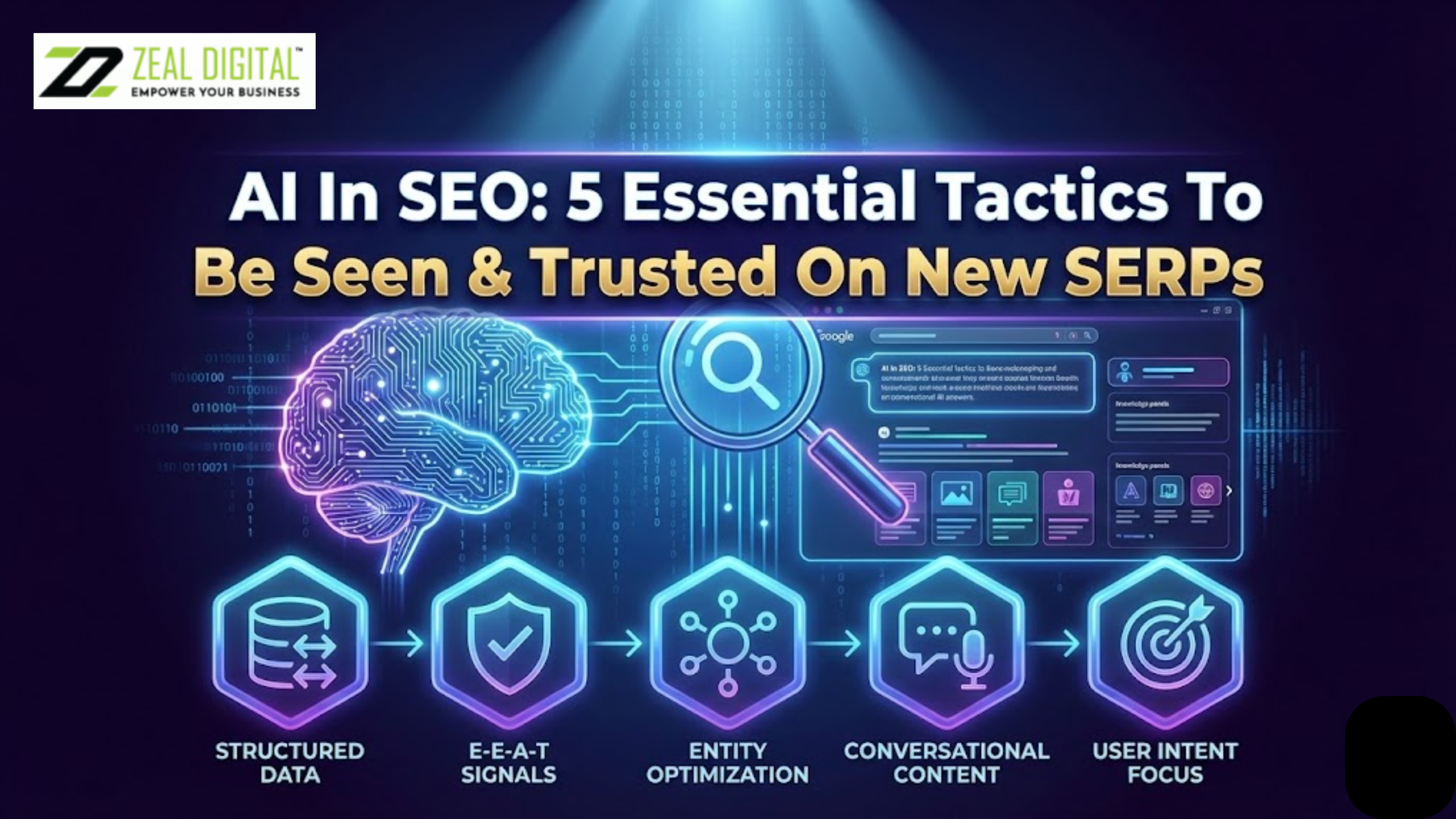
This blog explains how AI has changed SEO and outlines five essential tactics you must use to remain visible, credible, and competitive in this new environment.
Understanding How AI Has Changed Search
Before we look at new tactics, it is important to understand what has actually changed.
In the past, search engines worked mainly on:
- Keywords
- Backlinks
- Page structure
- Basic user signals
If you optimised these well, you usually ranked.
Today, AI systems analyse much more.
They look at:
- Search intent
- Topic depth
- Content quality
- Brand reputation
- User satisfaction
- Behaviour patterns
- Source reliability
Search engines now try to answer questions, not just list websites.
When someone searches, they may see:
- AI summaries
- Quick answers
- Knowledge panels
- Featured snippets
- Suggested follow-up questions
This means fewer people click traditional results.
The goal is no longer just rank number one. The goal is to be recognised as a trusted source that AI systems choose to reference.
Why Trust Matters More Than Ever
AI does not treat all websites equally.
It prefers sources that appear:
- Reliable
- Accurate
- Consistent
- Well-established
- Helpful
If your website looks thin, rushed, or unprofessional, it will struggle.
Trust is now a ranking factor, even if it is not always visible.
To succeed with modern SEO, you must build both technical strength and human credibility.
Tactic 1: Build Clear Topical Authority
One of the strongest signals in AI-powered search is topical authority.
This means being recognised as a reliable source for a specific subject.
What Is Topical Authority?
Topical authority means your website covers a subject deeply and consistently.
Instead of writing one article about a topic, you create:
- Core guides
- Supporting articles
- Related explanations
- Updates
- Case studies
Together, these form a knowledge network.
For example, a business focused on SEO might publish content about:
- Local SEO strategies
- Google Business optimisation
- Website audits
- Keyword research
- Technical SEO
- Content marketing
- Analytics
All connected and well organised.
Why AI Values Authority
AI systems want to recommend experts, not generalists.
If your website regularly provides accurate, detailed information on one subject, it becomes a trusted source.
This increases your chances of appearing in:
- AI answers
- Featured results
- Voice search
- Knowledge panels
How to Build Authority
- Choose clear topic areas
- Create content clusters
- Link related pages
- Update old content
- Remove weak pages
- Keep information accurate
Do not publish random content just for traffic. Focus on relevance.
Tactic 2: Optimise for Search Intent, Not Just Keywords
Keywords still matter, but they are no longer enough.
AI systems focus on intent. They try to understand what the searcher really needs.
Types of Search Intent
Most searches fall into four categories:
- Informational – learning something
- Navigational – finding a website
- Commercial – comparing options
- Transactional – ready to buy
For example:
“Best SEO in Parramatta” shows commercial intent.
“How does SEO work?” shows informational intent.
Each needs different content.
Why Intent Is Critical
If your page does not match intent, it will struggle, even if it uses the right keywords.
AI systems detect:
- Bounce rates
- Reading time
- Interaction
- Scrolling behaviour
If users leave quickly, it sends negative signals.
How to Match Intent
Before creating content, ask:
- What problem is the user trying to solve?
- What stage are they at?
- What information do they need now?
Then structure your content accordingly.
Service pages should focus on solutions and results, while blog posts should focus on education.
Tactic 3: Strengthen Experience, Expertise, Authority, and Trust
Search engines increasingly value what is often called E-E-A-T:
- Experience
- Expertise
- Authority
- Trust
AI systems try to measure these qualities.
Show Real Experience
Experience means showing you have actually done the work.
You can demonstrate this through:
- Case studies
- Examples
- Client stories
- Before-and-after results
- Practical advice
Avoid vague claims.
Demonstrate Expertise
Expertise comes from depth.
This means:
- Explaining topics clearly
- Using accurate language
- Avoiding mistakes
- Going beyond surface-level tips
Shallow content is easy for AI to spot.
Build Authority
Authority comes from recognition.
It is built through:
- Mentions
- Reviews
- Testimonials
- Industry presence
- Consistent quality
For businesses, a strong local reputation also matters.
Maintain Trust
Trust depends on:
- Clear contact details
- Privacy policies
- Honest pricing
- Accurate information
- Secure websites
Small details make a big difference.
Tactic 4: Create Human-Friendly, AI-Friendly Content
The best content now serves two audiences:
- Human readers
- AI systems
You must balance both.
Write for People First
Always prioritise clarity.
Use:
- Simple language
- Short sentences
- Clear headings
- Logical structure
- Real examples
Avoid jargon when possible.
Structure for AI Understanding
AI systems read the structure carefully.
Use:
- Clear H1, H2, H3 headings
- Bullet points
- Tables where useful
- Summaries
- FAQs
This helps AI extract meaning.
Answer Questions Directly
Many searches are questions.
Include:
- Direct answers
- Step-by-step guides
- Definitions
- Explanations
This increases the chances of appearing in AI summaries.
Keep Content Fresh
Outdated content loses trust.
Review and update regularly.
For SEO, this means adjusting to algorithm changes and local trends.
Tactic 5: Improve User Experience and Technical Quality
Even the best content fails if the website performs poorly.
AI systems strongly consider user experience.
Page Speed
Slow pages lose visitors.
Optimise:
- Images
- Scripts
- Hosting
- Caching
Fast sites rank better.
Mobile Usability
Most searches are mobile.
Ensure:
- Responsive design
- Readable text
- Easy navigation
- Clickable buttons
Site Structure
Good structure helps both users and AI.
Use:
- Clear menus
- Logical categories
- Internal links
- Clean URLs
Security and Stability
Secure sites build trust.
Use:
- HTTPS
- Regular backups
- Software updates
These protect reputation.
How These Tactics Work Together
These five tactics are not separate.
They support each other.
For example:
- Authority improves trust.
- Good structure improves experience.
- Intent improves engagement.
- Quality improves credibility.
When combined, they create strong signals for AI systems.
This is the foundation of modern SEO.
Common Mistakes to Avoid
Many businesses still make basic errors.
Chasing Algorithms
Do not chase every update. Focus on fundamentals.
Overusing AI Content
AI tools can help, but unedited AI content often lacks depth and accuracy.
Ignoring Local Signals
Local relevance matters greatly for SEO in Parramatta.
Publishing Thin Pages
A few words and little value hurt performance.
Neglecting Maintenance
Old content damages trust.
Preparing for the Future of Search
AI will continue to evolve.
Expect:
- More conversational search
- More personalised results
- More visual answers
- More voice searches
- Stronger credibility filters
Agencies and businesses must adapt.
Invest in:
- Training
- Content quality
- Data analysis
- User research
Stay flexible.
How Can Businesses Apply These Tactics?
For local businesses, practical steps include:
- Building strong service pages
- Creating local guides
- Sharing community content
- Collecting reviews
- Publishing case studies
- Improving mobile performance
These strengthen the local authority and AI trust.
Final Thoughts: Winning Trust in the Age of AI Search
Search is no longer just about rankings.
It’s about being recognised as a reliable source.
For businesses investing in SEO in Parramatta, success now depends on:
- Clear expertise
- Honest communication
- High-quality content
- Strong technical foundations
- Positive user experiences
The five tactics covered in this guide provide a practical framework for modern SEO.
When applied consistently, they help your website become visible, respected, and trusted by both users and AI systems.
In the new era of search, trust is the true ranking factor.
Build it carefully, protect it constantly, and your online presence will continue to grow.
Frequently Asked Questions (FAQs)
How does AI decide which websites to trust?
AI systems look at many signals, including content quality, accuracy, user behaviour, website security, brand reputation, and consistency. Websites that provide clear, helpful, and reliable information over time are more likely to be trusted and recommended.
Do keywords still matter in modern SEO?
Yes, keywords still matter, but they are not the only factor. AI focuses more on meaning and intent. This means your content should answer real questions and solve real problems, not just repeat keywords. When doing SEO in Parramatta, keywords should support good content, not replace it.
Can I use AI tools to create my website content?
AI tools can help with ideas and drafts, but they should not replace human editing. AI content often lacks real experience, local knowledge, and depth. To build trust and authority, content should always be reviewed and improved by a skilled writer.
How long does it take to see results from modern SEO?
SEO is a long-term process. Most businesses start seeing improvements within three to six months, but strong and stable results usually take longer. With SEO in Parramatta, competition levels and local market factors also affect timelines.
How can local businesses in Parramatta compete with larger brands online?
Local businesses can compete by focusing on quality, relevance, and community presence. This includes creating local content, collecting genuine reviews, improving mobile experience, and providing excellent customer service. With the right SEO in Parramatta strategy, smaller businesses can still achieve strong visibility.