


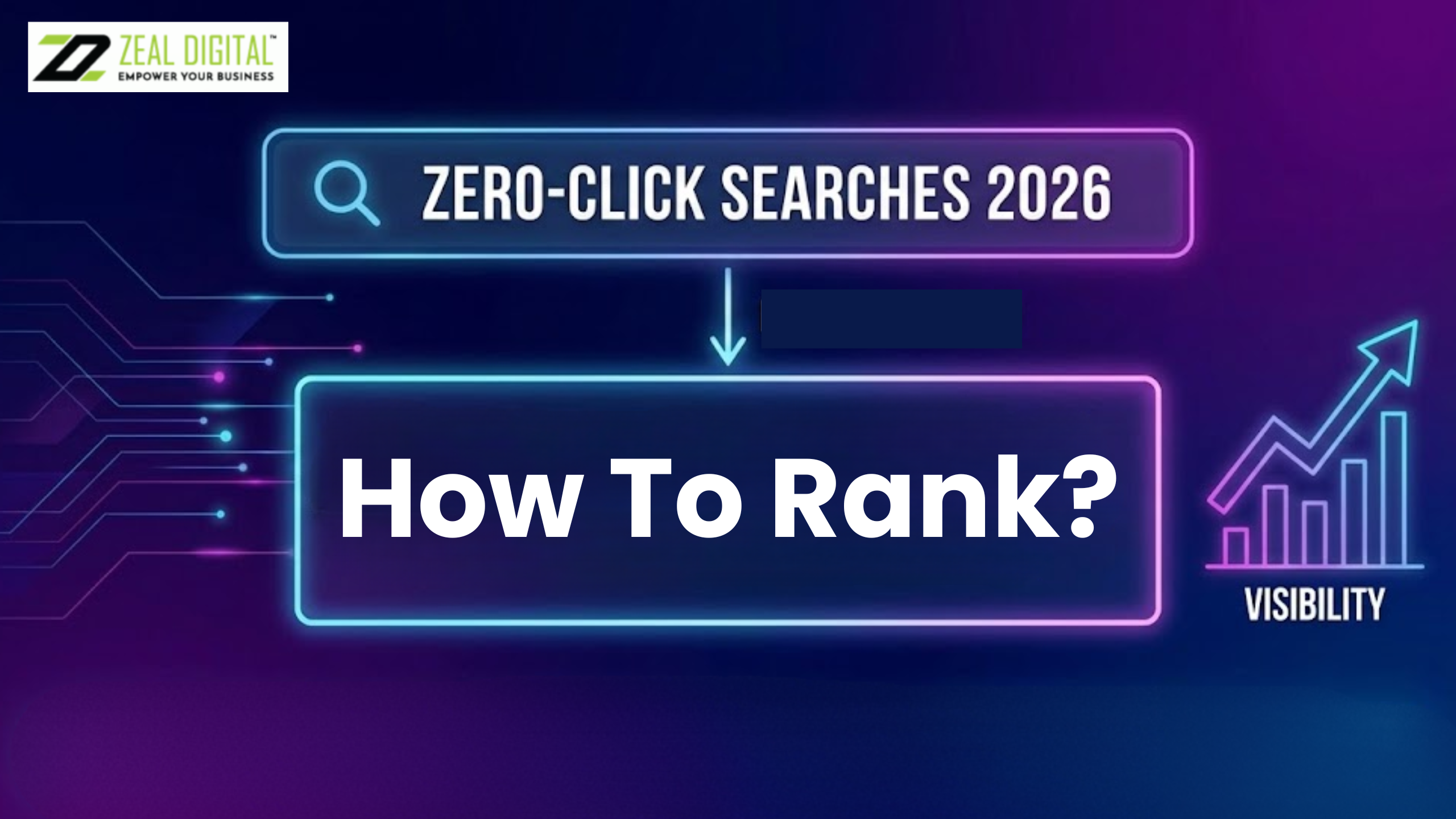
Search in 2026 no longer revolves around 10 blue links and a competition for the top spot. Today, search engines increasingly provide answers directly on the results page through AI-generated summaries, featured snippets and knowledge panels.
For brands, this shift may seem like a loss of traffic. In reality, it’s a shift in strategy. Visibility is no longer just about earning the click; it’s all about earning inclusion in the answer itself. Businesses that understand this early will position themselves not merely as websites to visit, but as trusted sources search engines rely on.
What Zero-Click Searches Actually Mean
A zero-click search happens when a user’s query is resolved directly on the search results page. Instead of clicking through to explore multiple articles, users see summarised information compiled from trusted sources. AI-generated overviews now synthesise content from various websites into one structured response, often eliminating the need for additional browsing.
This changes how performance is measured. Traffic alone is no longer the only indicator of success. When your content is cited or reflected in AI-generated summaries, your brand still gains exposure. Over time, repeated visibility builds familiarity and credibility, even without immediate visits.
For any modern internet marketing company, adapting to zero-click search means focusing on influence, authority and clarity rather than relying purely on volume-driven SEO tactics.
Why Zero-Click Search Is a Major Opportunity
Although zero-click results reduce direct traffic in some cases, they significantly increase brand exposure at high-intent moments. When your insights appear in AI summaries or answer boxes, users associate your name with expertise.
The competition has shifted from Who ranks first to whose information is trusted enough to be referenced. Brands that align their content with this reality will not disappear from search, they will become embedded within it.
How AI Search Engines Have Changed Visibility
AI-driven platforms such as Google’s AI Overviews, Perplexity AI and conversational systems like OpenAI’s ChatGPT interpret search queries differently from traditional engines.
Instead of matching keywords mechanically, they evaluate intent, context and semantic relationships. They scan multiple sources, extract core insights and generate consolidated answers. This means your content must be structured in a way that makes it easy for AI systems to interpret, verify and summarise.
Clear explanations, well-organised sections, factual accuracy and strong authority signals now influence whether your content is surfaced. The emphasis has moved from keyword density to informational clarity.
Rethinking Brand Visibility Beyond Clicks
In the zero-click era, visibility extends beyond sessions and pageviews. If your brand appears consistently in AI summaries, users begin to associate your name with trustworthy information. This builds what can be described as cumulative recognition, a form of digital presence that strengthens future engagement.
Search engines increasingly evaluate credibility, context and source reliability. When your content demonstrates depth and consistency, it becomes more likely to be referenced. Clicks may measure immediate interaction, but repeated inclusion builds long-term authority.
How to Optimise for Zero-Click Search in 2026
Winning in zero-click search requires a shift in content philosophy. Instead of designing pages purely to attract visits, you must structure them to deliver precise, extractable answers.
Begin by focusing on answer intent. Each section of your content should clearly address a specific query. Leading with a concise explanation — followed by deeper context — increases the likelihood of being selected for summaries or snippets.
Metadata also plays a role. Titles and descriptions should align closely with real user queries, using natural phrasing rather than forced keywords. Clear, descriptive URLs and logical site structure make it easier for search engines to understand topical relationships.
Authority must be reinforced across the web. Mentions, citations and references from credible platforms strengthen your reputation in the eyes of AI systems that cross-verify information. Recognition beyond your own website improves trust signals.
Technical structure supports this effort. Implementing structured data like FAQs, Articles and How-To schema improves machine readability. Schema acts as a framework that helps search engines interpret your content accurately and increases eligibility for enhanced results.
Performance remains essential. Fast-loading pages, strong mobile usability and stable user experience metrics contribute to overall trust and engagement, which influence AI visibility.
Finally, localisation adds another dimension. Many zero-click results now include map-based summaries and location-specific information. Businesses that clearly communicate their geographic relevance improve their chances of appearing in localised AI responses.
The Difference Between Traditional SEOs and Answer-Focused Optimisation
Traditional SEO centred on ranking links. Modern optimisation focuses on becoming a reliable answer source. This shift is sometimes referred to as Answer Engine Optimisation (AEO), where the objective is not simply to appear in results but to be cited within them.
While backlinks and keywords still matter, they are now part of a broader framework that includes clarity, credibility, structured data and user experience.
What to Expect Moving Forward
AI-driven search will continue evolving toward more conversational, personalised and summarised experiences. Engines will increasingly filter out low-value content and prioritise trusted sources with consistent authority.
Brands that invest in structured, accurate and well-organised content will adapt more effectively than those relying solely on outdated ranking tactics.
Final Thoughts
Zero-click search is not the end of SEO; it is its transformation.
In 2026, ranking alone is no longer the ultimate goal. Being referenced, summarised and recognised as a trusted source defines real visibility. Businesses that prioritise clarity, authority, technical strength and user value will continue to thrive in AI-driven search environments.
The brands that win will not chase clicks.
They will earn inclusion in the answer.
FAQs
Do zero-click searches hurt organic traffic?
They can reduce overall clicks, but they don’t eliminate visibility. When your content is referenced in AI summaries or answer boxes, your brand still gains exposure. Over time, this repeated visibility strengthens recognition and trust, which can drive higher-quality traffic later.
How can I increase my chances of being featured in AI answers?
Focus on creating clear, concise and well-structured content that directly answers specific questions. Use logical headings, provide accurate information and support your authority with credible references and strong site performance. Content that is easy to interpret is more likely to be selected.