



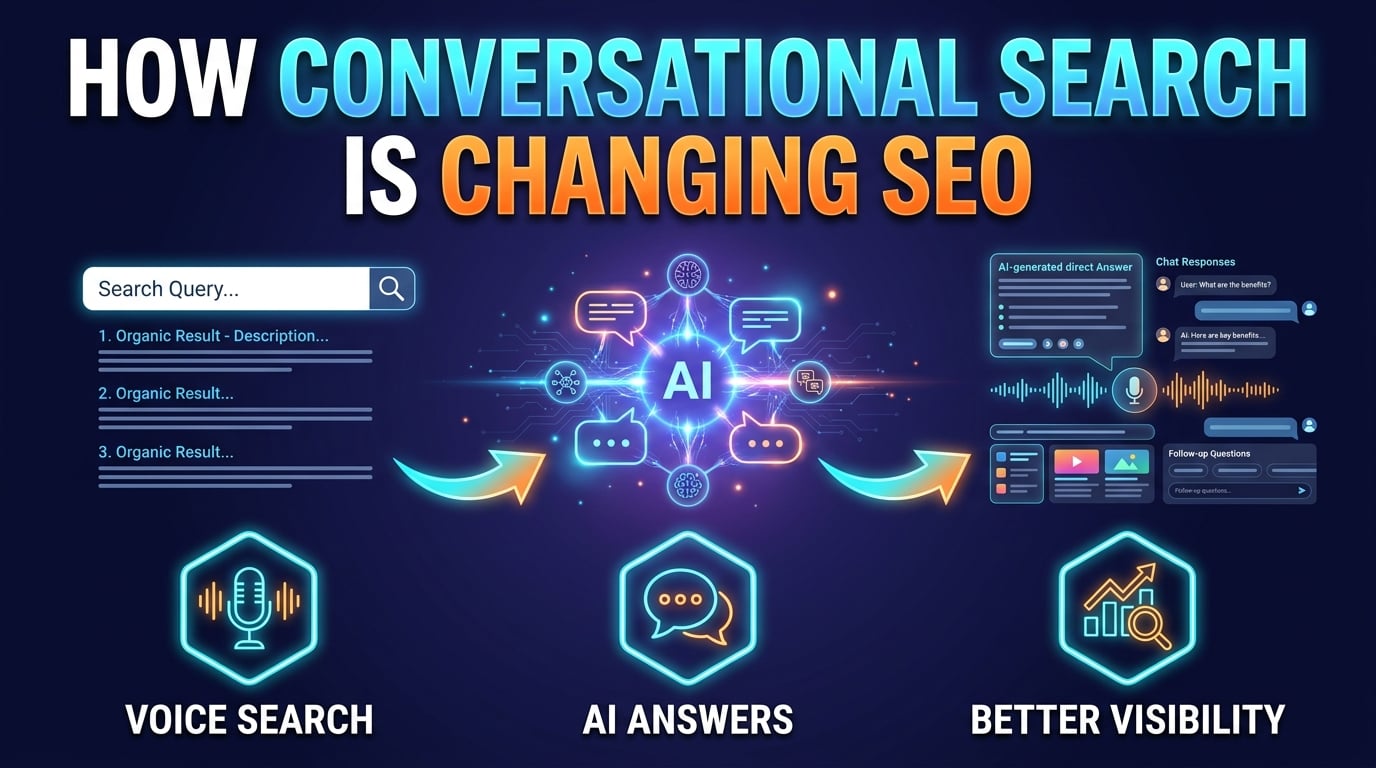
Online search behaviour is changing at a remarkable pace. Traditional search queries that once consisted of a few keywords are being replaced by more natural, conversational questions. Users are now interacting with search engines and AI-powered assistants much like they would speak to another person. This shift is transforming how content is discovered, ranked, and presented.
As conversational search becomes more common, businesses, marketers, and website owners need to adapt their SEO strategies to meet changing user expectations. Understanding how conversational search works and how it influences search behaviour is essential for maintaining visibility in modern search results.
Understanding Conversational Search
Conversational search refers to the process of using natural language when searching for information online. Instead of entering short keyword phrases, users ask complete questions or provide detailed requests.
Examples include:
- “What are the best ways to improve website traffic?”
- “How can I optimise my website for local searches?”
- “Which SEO strategies work best for small businesses?”
This approach mirrors everyday conversations and is largely driven by the growth of voice assistants, AI chatbots, and advanced search technologies.
Search engines now focus on understanding intent, context, and meaning rather than simply matching keywords.
Why Search Behaviour Is Shifting
Several factors are contributing to the rise of conversational search.
Increased Use of Voice Technology
Smart speakers, smartphones, and virtual assistants have encouraged users to speak their searches naturally. Voice queries tend to be longer and more detailed than typed searches.
Advancements in Artificial Intelligence
Modern search engines use sophisticated AI models to interpret language, understand context, and deliver more relevant answers.
Demand for Faster Answers
Users increasingly expect direct, accurate responses rather than scrolling through multiple pages of results. Conversational search helps satisfy this demand by providing concise and relevant information.
The Growing Importance of Search Intent
One of the biggest changes brought by conversational search is the increased emphasis on search intent.
Instead of focusing solely on specific keywords, search engines attempt to determine:
- What the user wants to know?
- Why they are searching?
- What stage of the decision-making process they are in?
- Which answer will be most useful?
Content that aligns closely with user intent is more likely to perform well in search results.
For website owners, this means understanding audience needs and creating content that addresses real questions rather than simply targeting search terms.
How AI Is Reshaping Search Results
AI-powered search experiences are changing the way information is presented.
Users are now seeing:
- AI-generated summaries
- Featured snippets
- Direct answer boxes
- Knowledge panels
- Conversational responses
These features often provide immediate answers without requiring users to visit multiple websites.
As a result, content creators must focus on producing clear, well-structured information that AI systems can easily interpret and reference.
What Does Conversational Search Mean for Content Creation?
Content strategies are evolving to accommodate more natural search patterns.
Write for Humans First
The most effective content sounds natural and addresses reader questions directly.
Rather than forcing keywords into every sentence, focus on providing valuable information in a conversational tone.
Answer Specific Questions
Question-based content performs particularly well in conversational search environments.
Consider addressing topics like:
- What is the process?
- Why is it important?
- How does it work?
- When should it be used?
- What are the benefits?
Clear answers improve both user experience and search visibility.
Build Topic Depth
Search engines increasingly reward content that demonstrates expertise and thorough coverage of a subject.
Instead of creating multiple thin articles, develop comprehensive resources that explore topics from different angles.
Why Long-Tail Queries Are Becoming More Valuable
Conversational searches often take the form of long-tail queries.
These searches are:
- More detailed
- More specific
- Closely aligned with user intent
- Often less competitive
For example, a user may search:
“How can a local business improve online visibility through SEO?”
Rather than simply searching:
“SEO tips”
Optimising for long-tail queries allows websites to connect with users who are looking for precise information.
How Can Businesses Adapt Their SEO Strategy?
Many organisations are asking an important question:
How can Businesses Stay Visible in Conversational Search?
The answer involves several key adjustments.
Focus on User-Centred Content
Create resources that solve problems, answer questions, and provide practical guidance.
Organise Information Clearly
Use:
- Descriptive headings
- Logical content structure
- Bullet points
- Short paragraphs
Well-organised content is easier for both users and search engines to understand.
Strengthen Topical Expertise
Cover related subjects comprehensively to establish authority within your niche.
The more complete your content ecosystem becomes, the easier it is for search engines to recognise your expertise.
Optimise for Natural Language
Include phrases and questions that reflect how people actually speak.
This helps align your content with conversational search patterns.
The Role of Voice Search in Modern SEO
Voice search continues to influence optimisation strategies.
Voice users typically:
- Ask complete questions
- Seek immediate answers
- Use local search terms
- Expect highly relevant results
Because of this, websites should focus on providing concise answers alongside more detailed explanations.
Content that effectively addresses common user questions may have greater opportunities to appear in voice search results.
User Experience Matters More Than Ever
Conversational search is not only about content. User experience also plays a significant role.
Important factors include:
- Fast-loading pages
- Mobile-friendly design
- Easy navigation
- Clear content formatting
- Accessible information
When users can quickly find answers, search engines are more likely to view the website positively.
Common Challenges Businesses Face
Adapting to conversational search can present several challenges.
Some of the most common include:
- Relying on outdated keyword-focused strategies
- Creating content without considering user intent
- Ignoring question-based search opportunities
- Publishing generic content that lacks depth
- Failing to optimise for mobile and voice users
Addressing these issues can help businesses remain competitive as search behaviour continues to evolve.
Looking Ahead: The Future of Search
Conversational search is likely to become even more influential in the coming years.
As AI technologies continue to advance, search engines will become smarter at understanding:
- Context
- User preferences
- Search history
- Complex questions
- Follow-up queries
This means successful SEO strategies will increasingly focus on delivering helpful, relevant, and contextually-accurate information.
Businesses that adapt early will be better positioned to benefit from these changes.
Conclusion
Conversational search is reshaping the SEO landscape by prioritising natural language, user intent, and meaningful interactions. As search engines become more sophisticated, content must move beyond simple keyword targeting and focus on answering real user questions.
Organisations that create valuable, well-structured, and informative content will be better equipped to maintain visibility across traditional search results and AI-driven experiences. Whether you’re a small business or a growing brand investing in SEO in Parramatta, adapting to conversational search is becoming an important part of long-term digital success.
FAQs
How does conversational search affect SEO?
It increases the importance of user intent, content quality, natural language optimisation, and comprehensive topic coverage.
What type of content performs well in conversational search?
Content that answers specific questions, provides useful information, and uses clear, natural language tends to perform best.
How can businesses prepare for conversational search?
Businesses should focus on user-focused content, improve website usability, optimise for natural language queries, and create comprehensive resources that address audience needs.