


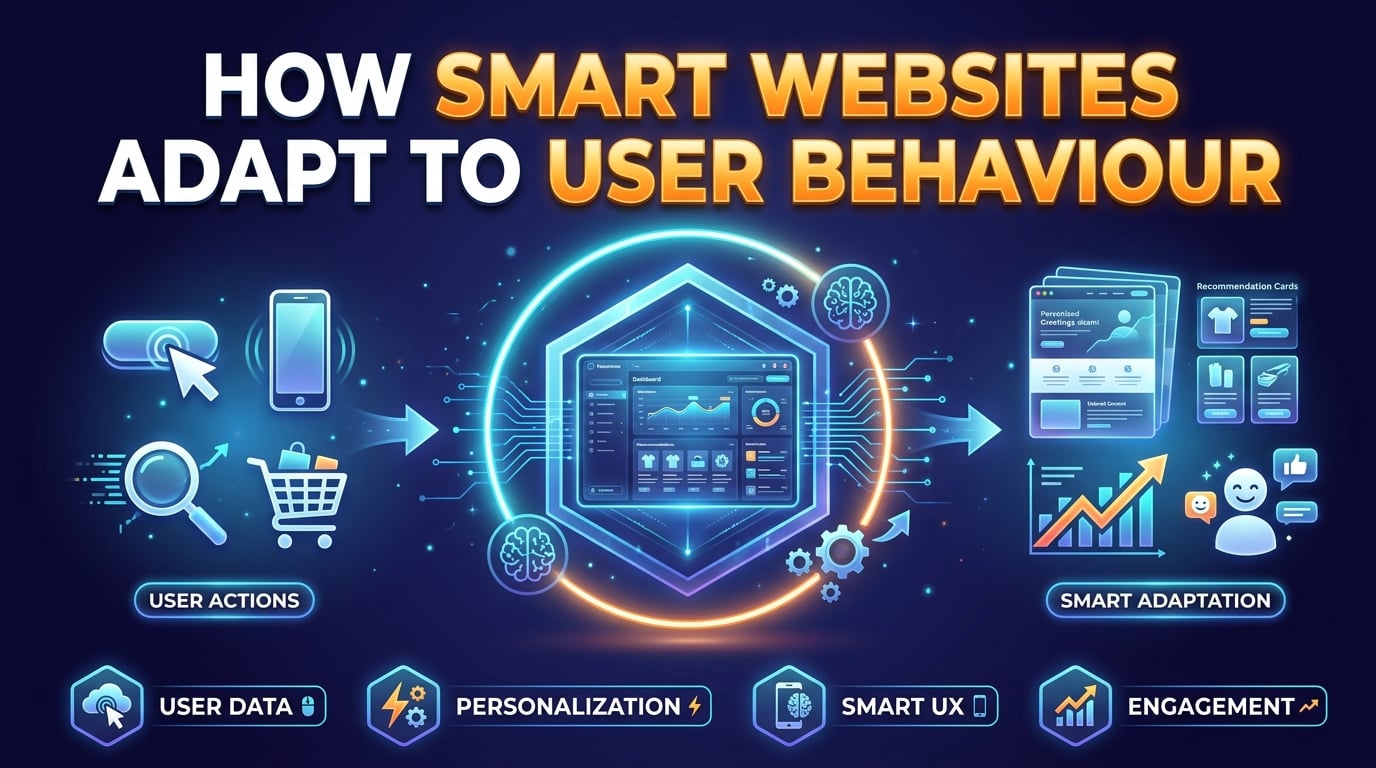
Modern websites are no longer static digital brochures. Today’s users expect fast, personalised, and intuitive online experiences that respond to their needs. As technology continues to evolve, businesses are increasingly adopting smarter website strategies that adapt to user behaviour in real time.
A smart website goes beyond attractive visuals and functional navigation. It uses data, user insights, and intelligent technologies to create a more engaging and relevant experience for every visitor. By understanding how users interact with a website, businesses can improve usability, increase engagement, and create stronger digital experiences.
In a competitive online environment, adapting to user behaviour is becoming an important factor in website success.
Understanding User Behaviour on Websites
User behaviour refers to the actions visitors take while interacting with a website.
This may include:
- Pages they visit
- Time spent on content
- Navigation paths
- Click patterns
- Device usage
- Search activity
- Form submissions
Analysing these interactions helps businesses understand what users want, what captures their attention, and where potential obstacles exist.
By gathering behavioural insights, website owners can make informed decisions that improve the overall user experience.
Why User Behaviour Matters
Every website visitor has unique goals and expectations.
Some users may be researching information, while others are ready to make a purchase or enquire about a service. Understanding these different behaviours allows businesses to deliver more relevant content and experiences.
Benefits of adapting to user behaviour include:
- Improved user engagement
- Better website usability
- Higher conversion opportunities
- Increased visitor satisfaction
- Stronger customer retention
- More effective content delivery
When websites align with user expectations, visitors are more likely to continue interacting with the content and exploring additional pages.
The Evolution of Smart Websites
Traditional websites often provide the same experience to every visitor regardless of their interests or behaviour.
Smart websites take a different approach.
They use data and intelligent systems to personalise content, improve navigation, and respond dynamically to user actions.
This evolution has been driven by advancements in:
- Artificial intelligence
- Machine learning
- Behavioural analytics
- Personalisation technologies
- User experience design
These innovations allow websites to become more responsive and user-focused than ever before.
How Smart Websites Personalise User Experiences
Personalisation is one of the most effective ways websites adapt to user behaviour.
Rather than showing identical content to every visitor, smart websites can tailor experiences based on individual interactions.
Dynamic Content Recommendations
Many websites analyse visitor behaviour to recommend relevant content.
For example, a user reading articles on a particular topic may be shown:
- Related blog posts
- Helpful resources
- Relevant products or services
- Educational guides
This helps users discover information that aligns with their interests.
Location-Based Experiences
Websites can adapt content based on geographic location.
Examples include:
- Localised offers
- Regional information
- Location-specific services
- Relevant contact details
This creates a more personalised experience for visitors from different regions.
Returning Visitor Recognition
Smart websites often recognise returning visitors and adjust content accordingly.
This may involve:
- Displaying previously-viewed content
- Showing relevant recommendations
- Providing personalised user journeys
Returning users often appreciate a more tailored browsing experience.
How Behavioural Data Improves Website Navigation
Website navigation plays a major role in user satisfaction.
When users struggle to find information, they are more likely to leave the website.
Behavioural analytics helps identify:
- Frequently-visited pages
- Common navigation paths
- Drop-off points
- User frustrations
- Search patterns
These insights enable businesses to refine menus, improve content organisation, and make important information easier to access.
The result is a smoother and more intuitive user journey.
What Can Smart Websites Learn From Visitor Actions?
This is one of the most important questions in modern web design.
What Insights Can User Behaviour Provide?
User behaviour can reveal valuable information about visitor preferences and needs.
For example, websites can identify:
- Which content attracts the most attention
- Where users spend the most time
- Which pages contribute to conversions
- What information users frequently search for
- Areas where visitors encounter difficulties
These insights help businesses continuously improve website performance and user experience.
The Role of Artificial Intelligence in Website Adaptation
Artificial intelligence is becoming increasingly important in website optimisation.
AI-powered tools can analyse large volumes of user data and identify patterns that may not be immediately obvious.
Common applications include:
Predictive Content Suggestions
AI can anticipate user interests and recommend relevant content before visitors actively search for it.
Behaviour-Based Personalisation
Content can be adjusted dynamically based on browsing history, user preferences, and engagement patterns.
Automated User Experience Improvements
AI systems can identify areas where users experience difficulties and suggest enhancements to improve website performance.
These capabilities help businesses create more responsive digital experiences.
Improving Conversion Rates Via User Behaviour Analysis
Understanding user behaviour can also contribute to improved conversion performance.
By analysing visitor actions, businesses can identify opportunities to optimise:
- Landing pages
- Calls-to-action
- Navigation pathways
- Content placement
- Form designs
Small adjustments based on behavioural insights can have a significant impact on user engagement and conversion outcomes.
The goal is not simply attracting visitors but guiding them towards meaningful interactions.
The Importance of Mobile Behaviour Tracking
Mobile devices account for a large portion of website traffic.
As a result, understanding mobile user behaviour is essential.
Businesses should evaluate:
- Mobile navigation patterns
- Page loading performance
- Touch interaction behaviour
- Content readability
- Mobile conversion paths
A positive mobile experience helps meet user expectations and supports overall website effectiveness.
Common Mistakes Smart Websites Avoid
Websites that successfully adapt to user behaviour often avoid several common mistakes.
These include:
- Presenting irrelevant content
- Overcomplicating navigation
- Ignoring user feedback
- Neglecting mobile optimisation
- Failing to analyse behavioural data
- Using a one-size-fits-all approach
Avoiding these issues can contribute to a more user-friendly and effective website.
Creating a Continuous Improvement Strategy
One of the key advantages of smart websites is their ability to evolve.
Rather than relying on assumptions, businesses can make decisions based on real user data.
A continuous improvement approach may involve:
- Monitoring behavioural trends
- Testing design changes
- Updating content regularly
- Refining navigation structures
- Enhancing user journeys
This ongoing process helps ensure the website remains relevant as user expectations change.
The Future of Behaviour-Driven Web Design
As technology continues to advance, websites are expected to become even more adaptive and personalised.
Emerging trends include:
- AI-driven personalisation
- Predictive user experiences
- Advanced behavioural analytics
- Dynamic content delivery
- Intelligent website optimisation
Businesses that embrace these innovations can create more engaging digital experiences and strengthen their online presence.
The future of web design is increasingly focused on understanding users and responding to their needs in meaningful ways.
Conclusion
Smart websites are transforming the way businesses interact with online audiences by adapting to user behaviour and delivering more personalised experiences. Through behavioural analytics, artificial intelligence, and continuous optimisation, websites can better understand visitor needs and provide relevant content, intuitive navigation, and improved user journeys.
As user expectations continue to evolve, businesses that invest in behaviour-driven website strategies will be better positioned to enhance engagement, improve conversions, and create lasting digital experiences. Whether developing a new website or upgrading an existing one, working with a website design company in Sydney can help businesses create smarter, more user-focused online platforms.
FAQs
How do websites track user behaviour?
Websites typically use analytics tools to monitor actions like page visits, click patterns, time on site, navigation paths, and user interactions.
Why is personalisation important for websites?
Personalisation helps deliver more relevant content and experiences, improving user engagement, satisfaction, and conversion opportunities.
Can user behaviour analysis improve website performance?
Yes. Analysing user behaviour helps identify areas for improvement, optimise navigation, enhance content delivery, and create a better overall user experience.