


Artificial intelligence (AI) is no longer a futuristic concept reserved for technology companies. It has become a powerful tool that is reshaping the digital marketing landscape across multiple disciplines. From improving search engine optimisation (SEO) strategies to enhancing paid advertising campaigns and creating more personalised web experiences, AI is changing how businesses connect with their audiences online.
As competition in the digital space continues to grow, businesses that understand and embrace AI-driven solutions can improve efficiency, gain deeper insights, and deliver better user experiences. While human creativity and strategic thinking remain essential, AI is becoming an increasingly valuable partner in modern marketing.
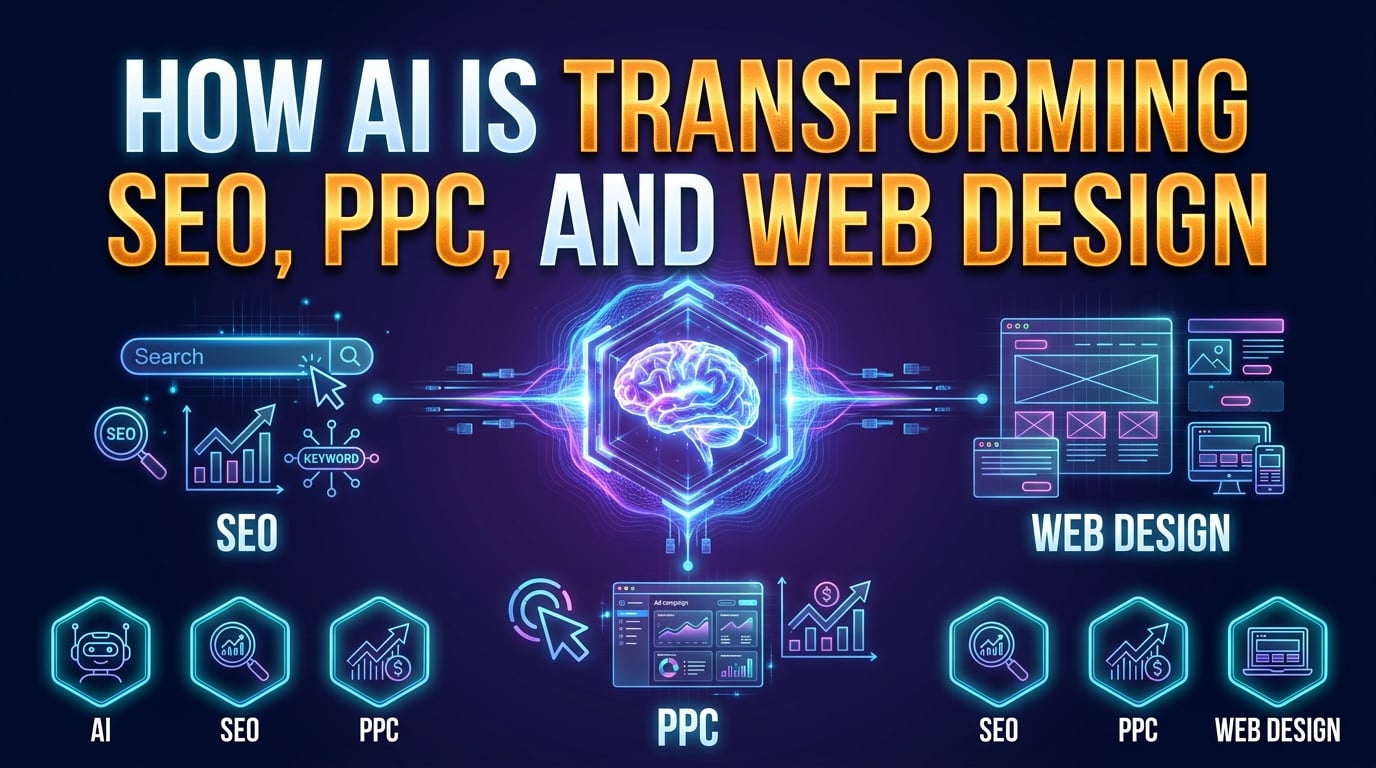
This article explores how AI is transforming SEO, PPC, and web design, and why these changes matter for businesses looking to stay ahead.
How AI Is Reshaping the Digital Marketing Landscape
AI has evolved beyond simple automation. Modern AI systems can analyse large amounts of data, identify patterns, predict user behaviour, and generate insights that help marketers make informed decisions.
Today, AI is helping businesses:
- Improve content strategies
- Analyse customer behaviour
- Optimise advertising campaigns
- Enhance website performance
- Deliver personalised user experiences
- Automate repetitive tasks
As AI technology continues to advance, its impact across digital marketing channels is becoming more significant.
How AI Is Revolutionising SEO
Search engine optimisation has undergone substantial changes in recent years. Search engines are increasingly using AI to understand content, interpret user intent, and deliver more relevant results.
As a result, SEO strategies are also evolving.
Smarter Keyword Research
AI-powered tools can identify keyword opportunities more efficiently than traditional methods.
These tools help marketers discover:
- Search trends
- Related topics
- User intent patterns
- Long-tail keyword opportunities
- Emerging search queries
This allows businesses to create content more quickly and better aligned with what users are searching for.
Improved Content Optimisation
AI can assist with analysing content performance and identifying opportunities for improvement.
Modern optimisation tools can provide recommendations on:
- Content structure
- Readability
- Topic coverage
- Semantic relevance
- Search intent alignment
This helps create content that is more useful for both users and search engines.
Enhanced Search Intent Understanding
One of AI’s greatest strengths is its ability to interpret context.
Rather than focusing solely on keywords, search engines now evaluate:
- User intent
- Query meaning
- Topic relationships
- Contextual relevance
Businesses that create content around user needs rather than keyword repetition are more likely to achieve sustainable results.
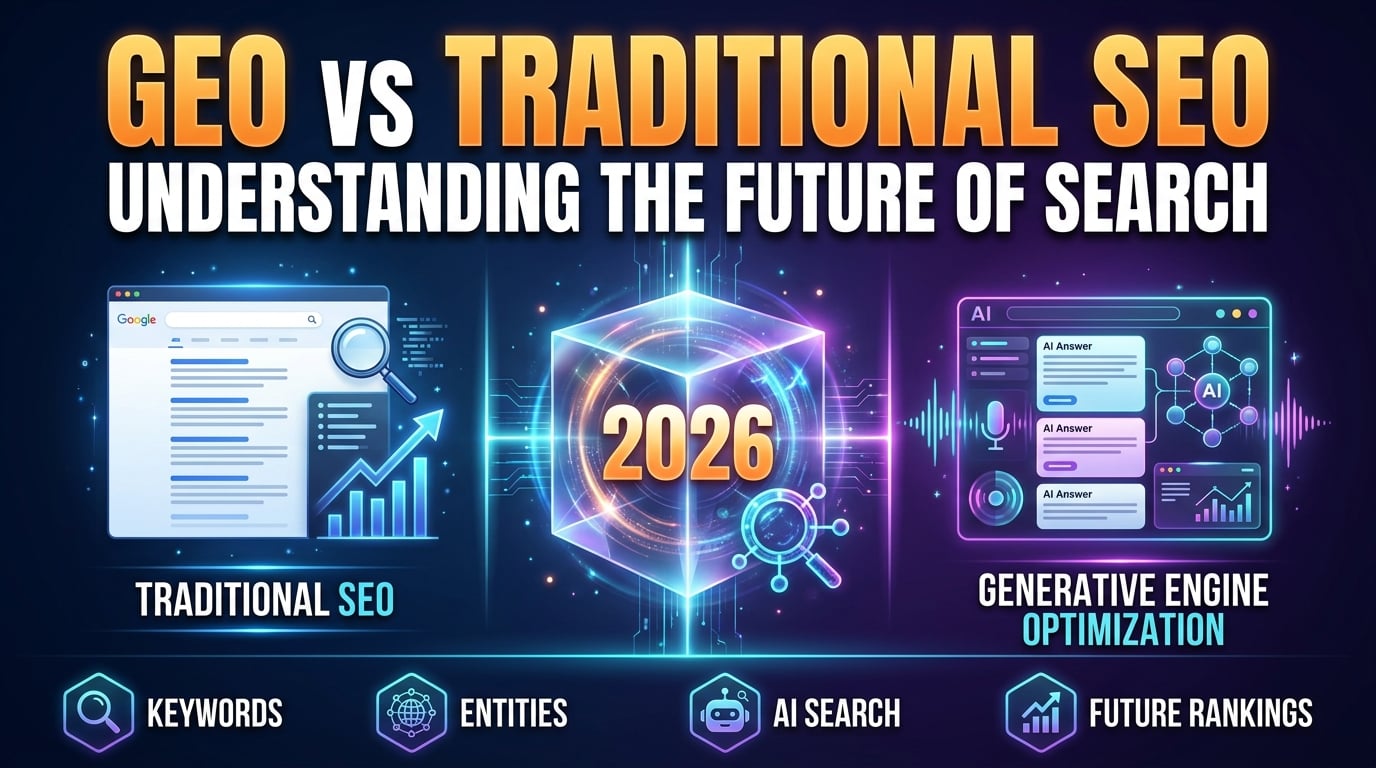
Support for Generative Search
The rise of AI-powered search experiences has introduced new optimisation opportunities.
Businesses are increasingly adapting content to appear in:
- AI-generated summaries
- Conversational search results
- Answer engines
- Voice search responses
This shift is encouraging a stronger focus on content quality, expertise, and authority.
How AI Is Transforming PPC Advertising
Pay-per-click advertising has always relied heavily on data and optimisation. AI is helping advertisers manage campaigns more efficiently while improving targeting and performance.
Automated Bid Management
AI can analyse large volumes of data in real time and adjust bids based on changing conditions.
This allows advertisers to optimise campaigns according to factors like:
- User behaviour
- Device type
- Location
- Time of day
- Conversion likelihood
Automated bidding can help improve efficiency while reducing manual workload.
Better Audience Targeting
Understanding the right audience is critical for successful PPC campaigns.
AI helps identify audience segments by analysing:
- Online behaviour
- Search patterns
- Purchase intent
- Engagement history
This enables businesses to reach users who are more likely to be interested in their products or services.
Improved Ad Personalisation
Consumers increasingly expect relevant advertising experiences.
AI can support personalisation by tailoring:
- Ad copy
- Offers
- Messaging
- Audience segments
More relevant ads often lead to stronger engagement and improved campaign performance.
Advanced Performance Analysis
AI-powered analytics tools can process complex datasets and provide actionable insights.
Marketers can quickly identify:
- High-performing campaigns
- Underperforming keywords
- Conversion trends
- Budget allocation opportunities
This helps improve decision-making and campaign optimisation.
The Impact of Artificial Intelligence on Web Design
Web design is no longer focused solely on aesthetics. User experience, functionality, and personalisation have become equally important.
AI is helping designers create websites that are more engaging and responsive to user needs.
Personalised User Experiences
AI can analyse visitor behaviour and customise website experiences accordingly.
Examples include:
- Personalised recommendations
- Dynamic content delivery
- Tailored product suggestions
- Relevant content displays
These experiences can help improve user engagement and satisfaction.
Smarter User Journey Analysis
AI tools can evaluate how visitors interact with a website.
This information helps identify:
- Navigation issues
- User drop-off points
- Conversion obstacles
- Content engagement patterns
Understanding these behaviours allows businesses to make informed design improvements.
Enhanced Website Accessibility
AI can assist with accessibility improvements by identifying potential usability barriers.
This may include recommendations related to:
- Navigation clarity
- Content readability
- User interaction improvements
- Accessibility compliance
Improving accessibility benefits a broader audience and contributes to a better overall user experience.
Faster Design and Testing Processes
AI-powered tools can streamline aspects of website creation and optimisation.
Tasks that may be supported include:
- Layout recommendations
- User experience analysis
- A/B testing insights
- Content suggestions
This allows teams to focus more on strategy and creativity while reducing repetitive work.
The Importance of Human Expertise
Despite its growing capabilities, AI is not a replacement for human expertise.
AI excels at:
- Data analysis
- Automation
- Pattern recognition
- Predictive insights
However, successful digital marketing still relies on human skills like:
- Strategic planning
- Creative thinking
- Brand storytelling
- Relationship building
- Ethical decision-making
The most effective approach combines AI efficiency with human judgement and experience.
How Organisations Can Embrace AI-Driven Change
Organisations looking to benefit from AI should focus on practical implementation rather than chasing every new trend.
Key priorities include:
- Investing in high-quality content
- Understanding audience behaviour
- Embracing data-driven decision-making
- Monitoring emerging technologies
- Continuously improving user experiences
- Adapting to changing search behaviours
Businesses that remain flexible and open to innovation are often better positioned to adapt as technology evolves.
The Future of Digital Marketing and AI
AI is expected to play an even greater role in digital marketing over the coming years.
Future developments may include:
- More advanced search experiences
- Improved predictive analytics
- Greater personalisation
- Enhanced automation capabilities
- Smarter customer interactions
While technology will continue to evolve, the fundamental goal of marketing will remain the same: delivering value to the right audience at the right time.
Businesses that successfully combine AI-powered tools with strong marketing fundamentals will be better equipped to compete in an increasingly digital world.
Conclusion
AI is transforming SEO, PPC, and web design by helping businesses analyse data more effectively, automate routine processes, and create more personalised user experiences. From smarter content strategies and targeted advertising campaigns to enhanced website performance, AI is becoming an essential part of modern digital marketing.
However, technology alone is not enough. The strongest results come from combining AI-driven insights with human expertise, creativity, and strategic thinking. Whether working with an internal team or a digital marketing company in Sydney, businesses that embrace AI responsibly can position themselves for long-term growth in an increasingly competitive digital landscape.
FAQs
Can AI improve PPC campaign performance?
Yes. AI can assist with audience targeting, automated bidding, ad personalisation, and campaign analysis, helping advertisers make more informed decisions.
How does AI benefit web design?
AI can improve user experience through personalisation, behaviour analysis, accessibility enhancements, and data-driven design recommendations.
Will AI replace digital marketers and web designers?
No! AI is a tool that supports efficiency and decision-making. But human creativity, strategy, and expertise remain essential for successful marketing and design outcomes.