


The search landscape is changing faster than ever. With the rise of artificial intelligence, conversational search, and AI-generated answers, businesses are beginning to explore new ways to improve their online visibility. One of the most talked-about concepts in digital marketing today is GEO, or Generative Engine Optimisation.
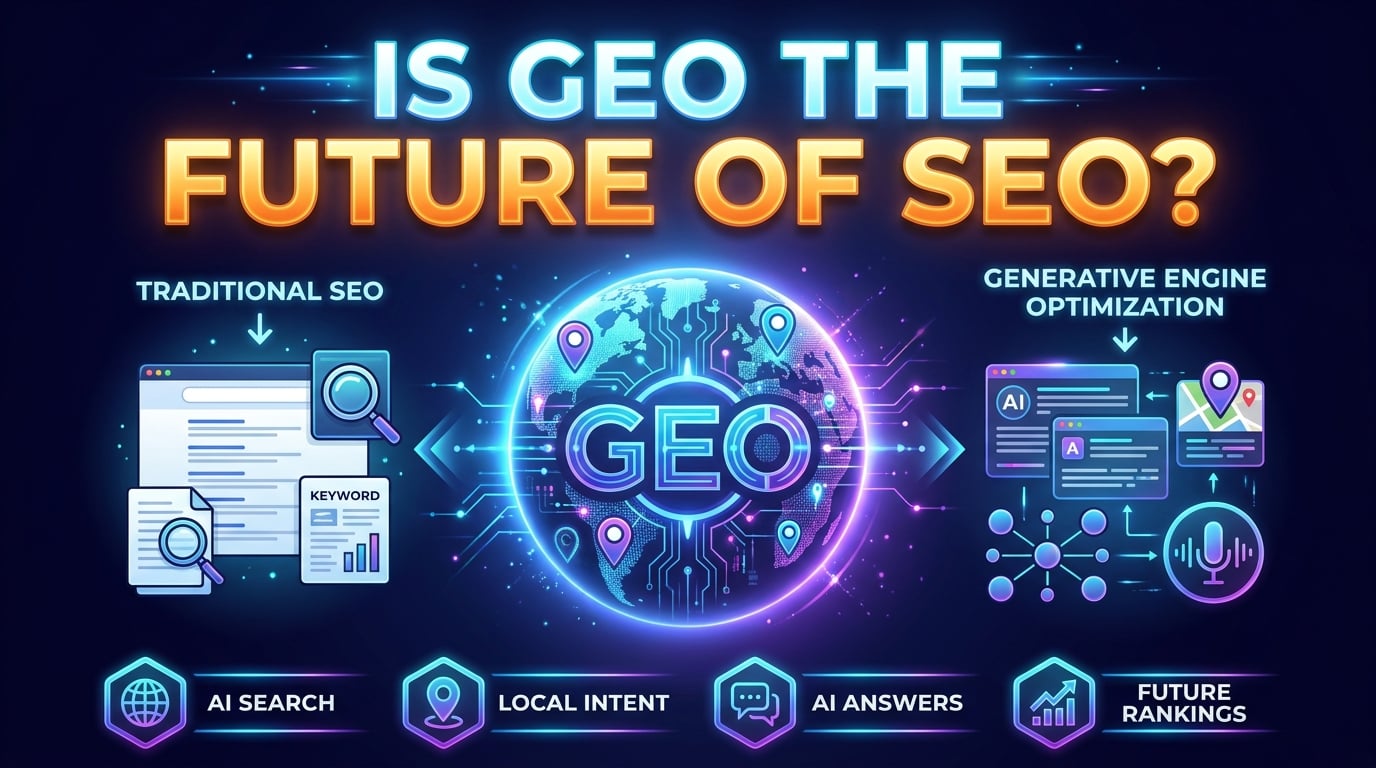
As AI-powered search tools become more sophisticated, many marketers are asking an important question: Is GEO replacing SEO, or is it simply the next evolution of search optimisation?
While traditional SEO remains a vital part of digital visibility, GEO is emerging as a strategy that helps businesses adapt to how people discover information through generative AI platforms. Understanding the relationship between GEO and SEO can help organisations prepare for the future of search.
What Is GEO?
Generative Engine Optimisation (GEO) refers to the practice of optimising content so it can be recognised, referenced, and used by AI-powered search engines and generative AI systems.
Unlike traditional search engines that provide a list of web pages, generative search platforms often generate direct answers by pulling information from multiple sources.
Examples of generative search experiences include:
- AI-generated summaries
- Conversational search assistants
- Intelligent answer engines
- AI-powered search overviews
- Virtual assistants that provide direct responses
GEO focuses on increasing the likelihood that your content becomes part of these AI-generated responses.
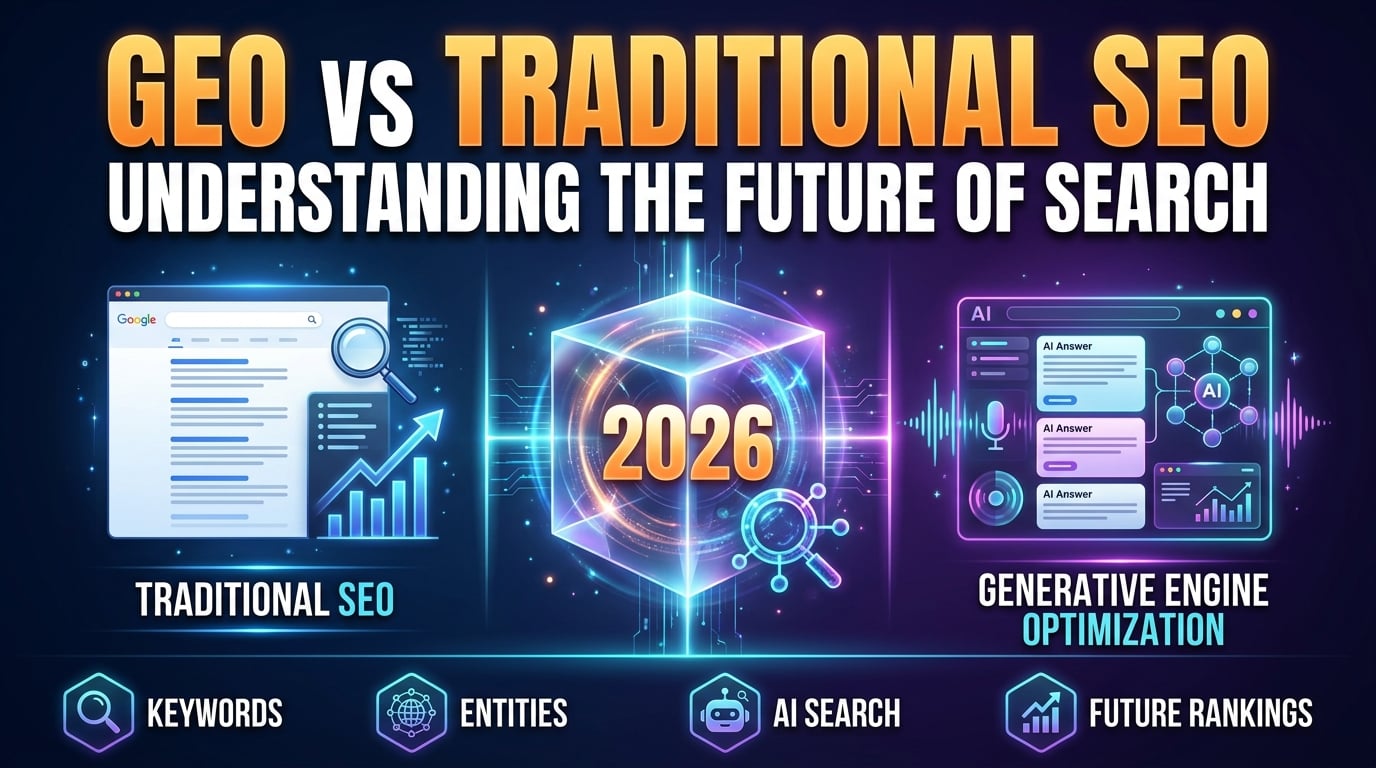
How GEO Differs from Traditional SEO
Although GEO and SEO share common goals, they operate in slightly different ways.
Traditional SEO primarily focuses on:
- Keyword optimisation
- Technical website performance
- Backlink acquisition
- Search rankings
- Organic traffic growth
GEO places additional emphasis on:
- Content clarity
- Contextual relevance
- Entity recognition
- Topic authority
- Structured information
- AI readability
Rather than simply ranking on a search results page, GEO aims to position content as a trusted source that AI systems can confidently reference.
Why GEO Is Gaining Attention
The growth of AI-powered search experiences has significantly changed how users interact with information online.
People are increasingly using AI tools to:
- Ask detailed questions
- Receive instant answers
- Compare options quickly
- Conduct research
- Solve problems efficiently
Instead of browsing multiple websites, users may receive a complete answer directly within an AI-generated response.
This shift means businesses must think beyond rankings and consider how their content is interpreted by generative systems.
The Rise of Answer-Based Search
Modern search behaviour is moving toward direct answers rather than traditional link-based exploration.
Users often ask questions like:
- How does a particular process work?
- What are the benefits of a service?
- Which solution is best for a specific problem?
- What steps should I follow?
AI systems attempt to provide complete answers instantly.
For content creators, this creates a new opportunity. Websites that offer accurate, comprehensive, and well-structured information are more likely to be referenced in AI-generated responses.
Is SEO Becoming Obsolete?
One of the biggest misconceptions surrounding GEO is that SEO is disappearing.
The reality is quite different.
SEO remains essential because search engines still rely on many traditional ranking signals, including:
- Content quality
- Website authority
- User experience
- Mobile usability
- Internal linking
- Technical performance
Without a strong SEO foundation, content may struggle to gain visibility in both traditional and AI-driven search environments.
Rather than replacing SEO, GEO builds upon it.
Why Topical Authority Matters More Than Ever
AI systems often favour content from sources that demonstrate expertise within a subject area.
This is where topical authority becomes critical.
Websites that consistently publish in-depth content around a specific niche are more likely to be viewed as reliable information sources.
Building topical authority involves:
- Covering related topics comprehensively
- Answering common audience questions
- Maintaining content accuracy
- Creating interconnected content clusters
- Demonstrating expertise over time
Strong topical authority supports both SEO and GEO objectives.
How Businesses Can Prepare for GEO
As generative search continues to evolve, businesses can take practical steps to improve their visibility.
Create High-Quality Informational Content
AI systems rely on useful information when generating responses.
Focus on:
- Educational articles
- Detailed guides
- Industry insights
- Frequently asked questions
- Problem-solving content
Valuable content remains one of the strongest assets for long-term search success.
Structure Content for Easy Understanding
Well-organised content is easier for both users and AI systems to interpret.
Best practices include:
- Clear headings
- Logical content flow
- Concise explanations
- Bullet points where appropriate
- Question-and-answer formats
Good structure improves readability and information retrieval.
Strengthen Entity Associations
Entities help AI systems understand topics and relationships.
Include relevant concepts, terminology, and related subjects naturally throughout your content.
This creates stronger contextual signals and improves content relevance.
Keep Information Accurate and Current
Generative systems often prioritise reliable and up-to-date information.
Regularly reviewing and updating content maintains relevance and trustworthiness.
What Role Does User Intent Play?
User intent has become one of the most important aspects of both SEO and GEO.
Search engines and AI systems aim to understand:
- What users are looking for
- Why they are searching
- Which answer best satisfies their needs
Content that directly addresses user intent is more likely to perform well across search platforms.
Instead of focusing exclusively on keywords, businesses should prioritise solving audience problems and answering genuine questions.
Will GEO Change Content Marketing?
Absolutely.
Content marketing strategies are already adapting to accommodate AI-driven search experiences.
Successful content will increasingly focus on:
- Expertise
- Accuracy
- Relevance
- Context
- User value
The goal is no longer just attracting clicks. It is becoming a trusted source of information that can be referenced across multiple search environments.
This shift encourages higher-quality content creation and deeper topic coverage.
Potential Challenges of GEO
While GEO presents exciting opportunities, it also introduces new challenges.
Some businesses may face difficulties such as:
- Reduced direct website traffic from AI-generated answers
- Increased competition for authority signals
- Greater emphasis on content quality
- Rapid changes in search technology
- Evolving optimisation best practices
Staying informed and adapting strategies regularly will be important for long-term success.
The Future of Search: SEO and GEO Together
The future of search is unlikely to be a choice between SEO and GEO.
Instead, they will work together.
Traditional SEO provides the technical and strategic foundation needed for online visibility. GEO expands that visibility into AI-powered environments where users increasingly seek answers.
Businesses that combine strong SEO fundamentals with GEO-focused content strategies will be better positioned to adapt to changing search behaviours.
The organisations that focus on authority, expertise, user intent, and content quality are likely to benefit most from the next phase of search evolution.
Conclusion
GEO is shaping the future of search, but it is not replacing SEO. Instead, it represents an evolution in how content is discovered, interpreted, and presented by AI-powered systems. Businesses that invest in valuable content, topical authority, and user-focused optimisation can strengthen their visibility across both traditional search engines and emerging generative platforms.
As search technology continues to advance, organisations that embrace both GEO and SEO principles will be better equipped to remain competitive online. Whether you are working with an SEO company in Parramatta or managing your own digital strategy, understanding GEO can help you prepare for the future of search.
FAQs
What types of content support GEO?
Comprehensive guides, educational articles, FAQs, expert insights, and well-structured informational content are all valuable for GEO.
Does GEO help with AI search results?
Yes. GEO aims to improve the chances of content being included in AI-generated summaries, answers, and conversational search responses.