


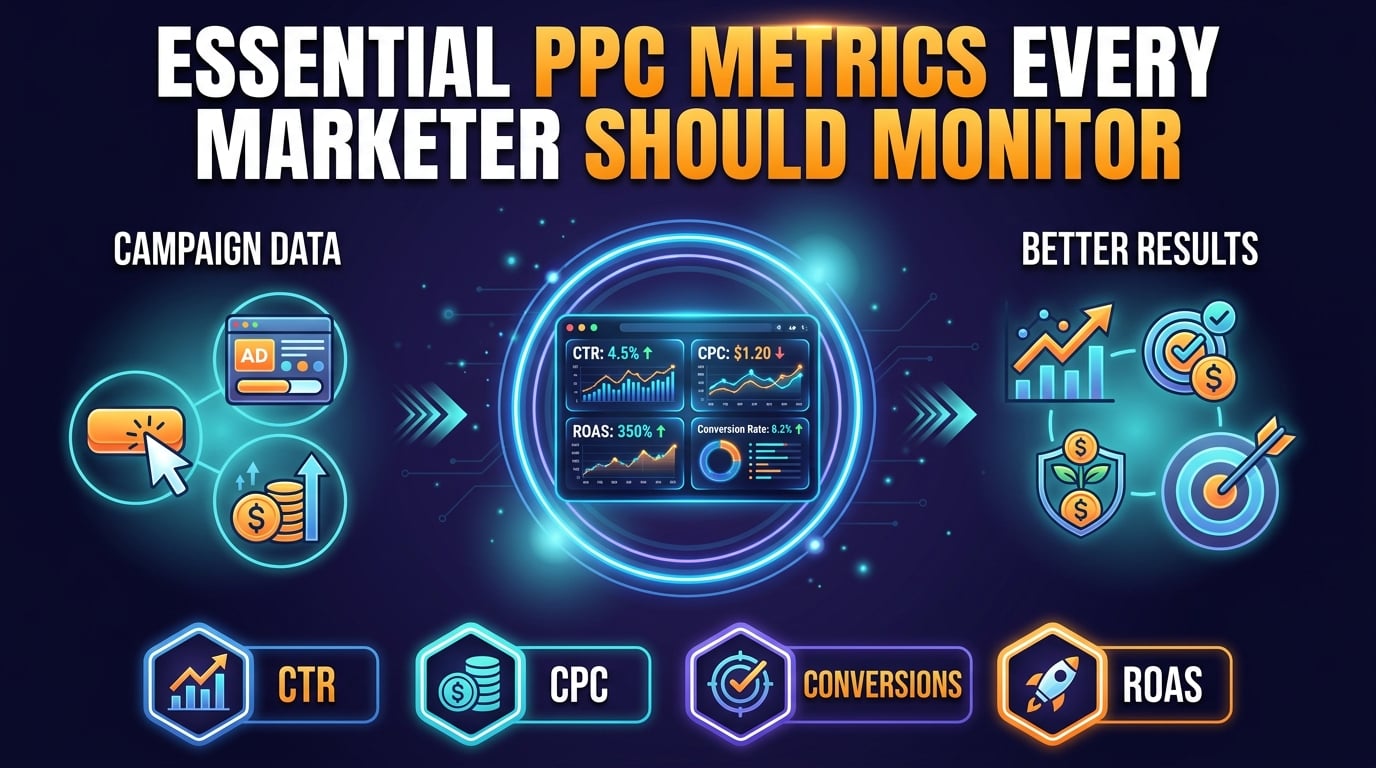
Pay-per-click (PPC) advertising remains one of the most effective ways to generate targeted traffic, leads, and conversions in digital marketing. However, running successful PPC campaigns is not just about launching ads; it’s about continuously monitoring performance and making data-driven decisions.
As advertising platforms become more advanced and competitive, understanding the right metrics is essential for improving efficiency, reducing wasted spend, and maximising return on investment. Whether managing campaigns in-house or working with a PPC consultant, tracking the right data can significantly improve campaign outcomes.
Why PPC Metrics Matter
PPC metrics provide insight into how well your campaigns are performing. They help advertisers understand:
- Which ads are driving results
- Where budget is being spent effectively
- How users are interacting with ads
- Whether campaigns are meeting business goals
Without proper tracking, it becomes difficult to optimise campaigns or identify opportunities for improvement.
Metrics act as a performance guide, helping marketers refine targeting, messaging, and bidding strategies over time.
Click-Through Rate (CTR)
Click-through rate measures how often users click on your ad after seeing it.
It is calculated by dividing the number of clicks by impressions.
Why CTR is important
A strong CTR indicates that your ad is relevant and engaging to your target audience. It reflects how well your messaging aligns with user intent.
What affects CTR?
- Ad copy quality
- Keyword relevance
- Audience targeting
- Ad placement
- Visual appeal (for display ads)
Improving CTR often leads to better quality scores and lower advertising costs.
Cost Per Click (CPC)
Cost per click represents how much you pay each time someone clicks on your ad.
Why CPC matters
CPC helps advertisers understand how efficiently their budget is being used. Lower CPC means you can drive more traffic within the same budget.
Factors influencing CPC
- Industry competition
- Keyword demand
- Ad quality score
- Bidding strategy
- Target audience specificity
Monitoring CPC trends helps businesses control advertising expenses effectively.
Conversion Rate
Conversion rate measures the percentage of users who complete a desired action after clicking your ad.
This could include:
- Filling out a form
- Making a purchase
- Signing up for a service
- Downloading content
Why conversion rate is critical
A high conversion rate means your landing page and offer are aligned with user expectations. It indicates that traffic is not only being generated but also delivering value.
Improving conversion rate often involves:
- Better landing page design
- Clear calls to action
- Faster page load speed
- Relevant messaging alignment
Cost Per Conversion (CPA)
Cost per acquisition (or cost per conversion) shows how much you spend to generate a single conversion.
Why CPA is important
CPA is one of the most important profitability metrics in PPC advertising. It directly reflects how efficiently your campaigns are generating results.
A lower CPA generally indicates better campaign performance and stronger return on investment.
How to optimise CPA
- Improve audience targeting
- Refine keyword selection
- Test different ad creatives
- Optimise landing pages
- Adjust bidding strategies
Quality Score
Quality Score is a metric used by advertising platforms to measure the relevance and quality of your ads.
It is influenced by:
- Expected click-through rate
- Ad relevance
- Landing page experience
Why Quality Score matters
A higher Quality Score can lead to:
- Lower CPC
- Better ad positions
- Improved overall performance
It reflects how well your ad matches user intent and expectations.
Impression Share
Impression share refers to the percentage of times your ads are shown compared to how often they could be shown.
Why it matters
This metric helps identify missed opportunities due to budget limitations or low ad ranking.
If impression share is low, it may indicate:
- Insufficient budget
- Weak bidding strategy
- Competitive market conditions
Improving impression share can help increase visibility and traffic.
Return on Ad Spend (ROAS)
Return on ad spend measures the revenue generated for every dollar spent on advertising.
Why ROAS is essential
ROAS is a key profitability indicator. It helps businesses determine whether their campaigns are financially sustainable.
A higher ROAS means better return from advertising investment.
Improving ROAS
- Target high-intent audiences
- Optimise conversion funnels
- Refine keyword targeting
- Focus on high-performing campaigns
Average Position and Ad Rank
Although modern platforms have shifted away from strict position metrics, ad rank still plays a crucial role in determining visibility.
Ad rank is influenced by:
- Bid amount
- Quality Score
- Competition level
- Expected impact of ad extensions
Why it matters
Higher ad rank improves visibility and increases the likelihood of engagement.
Bounce Rate (Post-Click Behaviour)
Bounce rate measures how quickly users leave your website after clicking an ad.
Why it’s important in PPC
A high bounce rate may indicate:
- Poor landing page experience
- Misaligned ad messaging
- Slow page load speed
- Irrelevant traffic
Reducing bounce rate improves the chances of conversions.
How to Prioritise PPC Metrics
Not all metrics carry the same weight. The most important ones depend on your campaign goals.
For traffic-focused campaigns:
- CTR
- CPC
- Impression share
For conversion-focused campaigns:
- Conversion rate
- CPA
- ROAS
For brand awareness campaigns:
- Impression share
- CTR
- Reach
Understanding your objective helps you focus on the metrics that matter most.
Common PPC Monitoring Mistakes
Many advertisers struggle with PPC performance due to avoidable mistakes.
These include:
- Focusing only on clicks instead of conversions
- Ignoring landing page performance
- Not testing ad variations
- Overlooking negative keywords
- Failing to track ROI properly
Avoiding these mistakes can significantly improve campaign outcomes.
The Role of Data in Smarter PPC Decisions
Data-driven decision-making is essential for PPC success. By consistently analysing performance metrics, marketers can identify trends, optimise campaigns, and improve return on investment.
Successful PPC strategies rely on continuous testing, refinement, and analysis rather than one-time setup.
Conclusion
Understanding and monitoring PPC metrics is essential for running successful advertising campaigns. From click-through rate and cost per click to conversion rate and return on ad spend, each metric provides valuable insight into campaign performance. By tracking the right data and making informed adjustments, businesses can improve efficiency, reduce wasted spend, and achieve better results. Whether managing campaigns independently or working with a PPC consultant, focusing on key performance metrics is critical for long-term PPC success.
FAQs
Why is conversion rate important in PPC?
Conversion rate shows how effectively your ads turn clicks into meaningful actions like sales or enquiries.
How often should PPC campaigns be monitored?
PPC campaigns should ideally be monitored regularly, with performance reviews conducted weekly or monthly depending on budget size.
What is a good ROAS for PPC campaigns?
A good ROAS varies by industry, but generally, a higher ROAS indicates stronger campaign profitability and efficiency.