


Most keyword research follows a familiar pattern. Find terms with reasonable search volume and manageable competition. Produce content targeting those terms. Hope that the people searching are actually the people you want.
It is not a bad starting point. But it is also, in 2026, genuinely incomplete. The gap between what people search and what they actually need is where most SEO strategies quietly lose value. And closing that gap requires data that no keyword tool can give you.
Understanding the Data Hierarchy
Digital marketing data tends to be categorised by where it comes from and the nature of the consent relationship attached to it.
Third-party data was collected by someone else and shared or sold. It is largely unavailable now, constrained by privacy legislation and technically disrupted by cookie deprecation. Most practitioners have absorbed this reality.
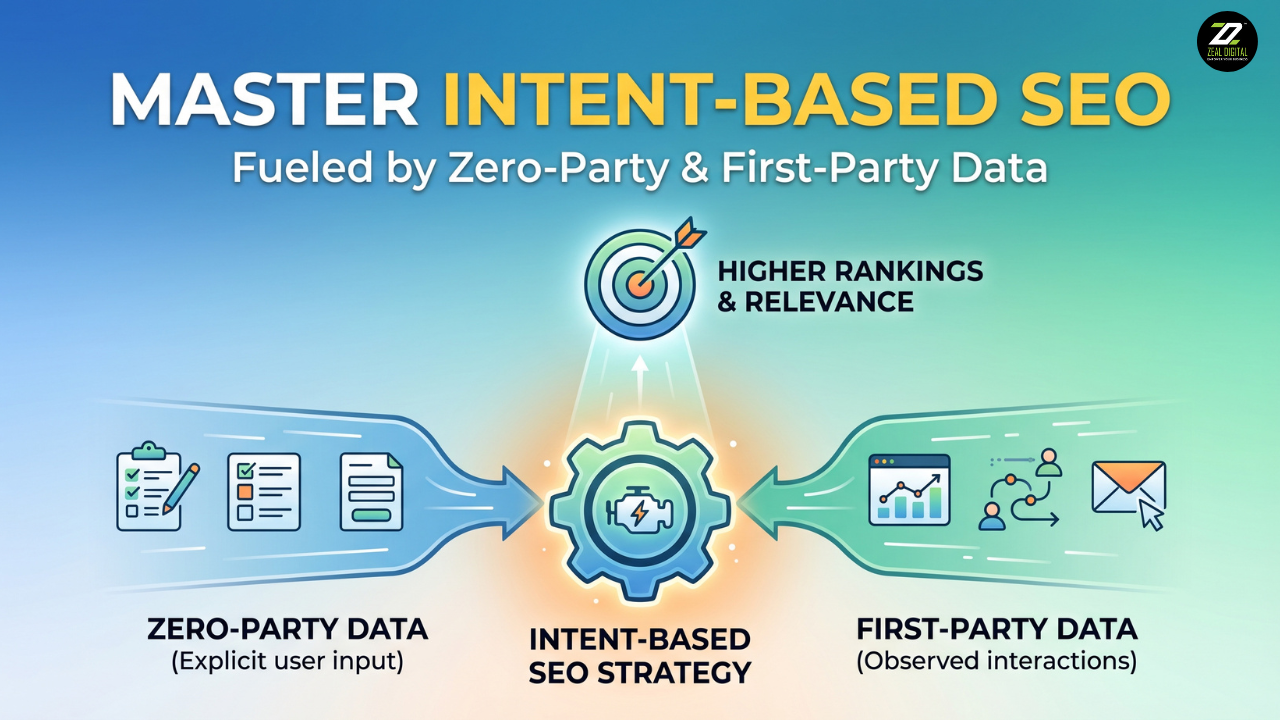
First-party data is information you collect directly from your audience through your own channels. Analytics behaviour, CRM records, email engagement patterns, on-site interactions, and purchase history. You collected it yourself, the user consented, and it reflects real behaviour from real people who chose to interact with you.
Zero-party data goes a step further. It is information people deliberately and explicitly share with you about their preferences, intentions, and needs. Survey responses. Quiz results. Preference centre selections. Product configurators. The user is not just generating behavioural signals. They are telling you directly what they want.
Both types change what an SEO strategy can look like when used properly.
What Intent-Based SEO Actually Requires
Search intent has been part of the practitioner conversation for years. The basic framework, informational, navigational, commercial, transactional, is widely understood. But grasping intent at that categorical level is just the entry point.
A genuine intent-based strategy requires knowing where someone is in their decision journey. What questions do they still have? What objections are they working through? What would actually resolve their search and move them forward? That level of understanding cannot come from keyword data alone. It comes from knowing your audience in a deeper way.
How First-Party Data Feeds Keyword Strategy
Your analytics and CRM infrastructure contain intent signals that most businesses have not fully connected to their content planning.
Email subject line performance reveals what your audience values enough to click on. Content download patterns show which problems are being most actively researched. The page sequences people follow before submitting a form reveal the information architecture that supports decision-making. Post-inquiry communication shows what questions people still have after their first contact.
All this can directly inform keyword and content strategy in concrete ways. If analytics show that a high proportion of leads engage with content on a specific topic before converting, that topic deserves deeper coverage. If CRM data reveals that the highest-value customers consistently arrive first through a particular topic cluster, that cluster warrants further investment.
First-party data turns content strategy from a supply-side exercise, what is being searched, into a demand-side exercise, what does our actual audience genuinely need at each stage of their journey.
Zero-Party Data as an Intent Research Tool
Zero-party data offers something that first-party behavioural data cannot. The explicit intention behind the behaviour.
You are not inferring what someone wanted from how long they spent on a page. You are hearing them say it directly.
Practical methods with direct SEO applications:
- On-site surveys and polls asking visitors what they came to find and whether they actually found it. The gap between what people came for and what they got is often where content investment should go next.
- Email preference centres where subscribers indicate their interests and preferred content formats. This tells you exactly what to create more of.
- Interactive quizzes or diagnostic assessments that help users understand their own situation while surfacing relevant content for each outcome.
- Post-purchase or post-inquiry surveys asking customers what questions they had during their research process and what helped them make a decision.
In aggregate, these responses reveal the actual intent landscape of your audience. Not the theoretical intent inferred from keyword categorisation, but the real questions, genuine concerns, and specific information gaps your customers experience.
What Changes When You Build Content From Real Intent Data
When you have explicit audience intent data, content creation stops being speculative. You know what your audience says it needs. You know how it prefers to consume information. You know what questions remain unanswered at each stage of the journey.
The practical improvements are noticeable:
- Headings address real questions rather than keyword-optimised approximations of real questions
- Content depth reflects what your audience actually needs to make progress, not a generic word count target
- FAQ sections are drawn from actual customer questions rather than brainstormed approximations
- Objection-handling content covers real objections because your data has told you exactly what those are
There is an interesting secondary effect here, too. Content produced from genuine audience intent data tends to read as authentically human. It has the slight irregularities of someone writing to answer a real person’s real question rather than optimising for a pattern. That quality is harder to manufacture and tends to perform better across readability and engagement metrics.
The Integration Challenge Most Teams Face
The main obstacle to making this work is not access to data. Most businesses have more first-party data than they are using. The challenge is integration. CRM, analytics, email platform, and content planning workflow often exist in separate systems with limited crossover.
Bridging them requires either a dedicated data integration layer or a team structure where someone is specifically responsible for translating audience signals into content strategy inputs. Neither is trivial. But the competitive advantage for businesses that manage it is real and durable.
Competitors relying purely on keyword tools are producing content based on the same publicly available signals as everyone else. The differentiation comes from the audience understanding that only your own data can provide.
Final Thoughts
Intent-based SEO is not a new concept. What has changed is how much better the available data has become for executing it properly. First-party and zero-party data allow content strategies to be built on genuine, specific audience understanding rather than aggregated search behaviour that reflects everyone and no one simultaneously. For businesses serious about durable organic growth, working with SEO consultant services in Parramatta or a specialist who genuinely understands how to integrate audience data into search strategy is where this approach becomes a real competitive advantage rather than just a good idea.
FAQs
Can small businesses collect useful zero-party data?
Yes. Simple post-inquiry surveys or on-site polls can yield valuable intent insights without any enterprise infrastructure.
How does first-party data improve keyword research?
It reveals which topics drive real conversions from your actual audience rather than relying solely on broad search volume estimates.
Is intent-based SEO more effective than traditional keyword research?
When executed with real audience data, yes. It produces content that more precisely serves what your audience actually needs.
What tools help collect zero-party data?
Typeform for surveys, email preference centres, on-site quiz plugins, and post-purchase survey integrations all work well.