


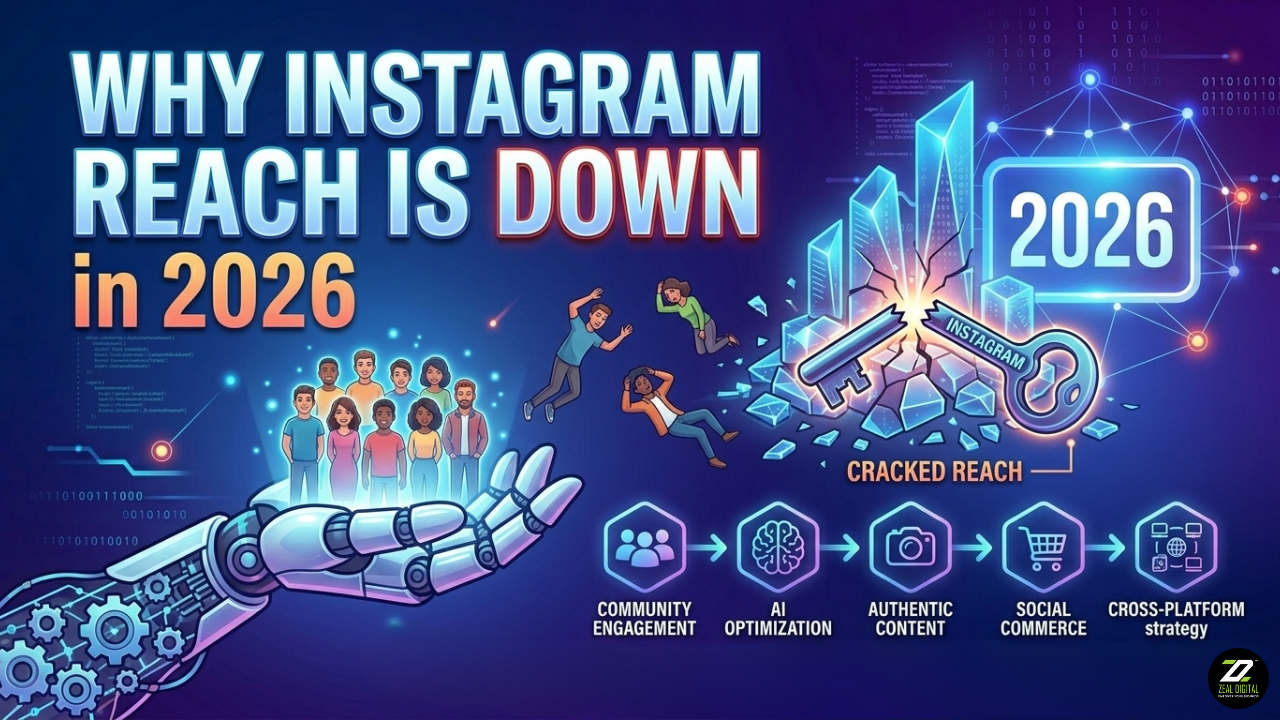
If your Instagram numbers have been making less sense lately, you are not alone. Accounts with tens of thousands of followers posting content that would have performed solidly two years ago are now watching it barely reach a fraction of their audience. The decline is real. It is documented. And it is not a temporary algorithm hiccup you can wait out.
The Structural Shift That Changed Everything
Instagram made a decision that fundamentally altered how the feed works. It moved toward a recommendation model. Rather than showing users content primarily from accounts they follow, the platform now fills a significant portion of the feed with content from accounts they do not follow.
This is modelled on what TikTok’s For You Page does so effectively. And for the platform’s engagement metrics, it appears to be working.
For brands and creators, though, the trade-off is stark. Your followers are seeing less of your content because Instagram has decided to use more of their feed to show them content from across the platform. The audience you spent years building now has reduced access to what you publish.
That is the core issue. Everything else flows from it.
Why Brand Content Specifically Loses Out
Recommendation algorithms across all major platforms have shown a consistent preference. Content that feels personal, native, and uncontrived outperforms content that signals production and promotional intent. This is not a philosophical stance by the platform. It is a reflection of how users actually behave.
People engage more with raw moments, genuine opinions, and content that does not feel like it came from a marketing team. This puts polished brand content at a structural disadvantage in the recommendation layer.
The difficult truth is that the quality investments many brands have made, the clean photography, the consistent grid aesthetic, and the carefully-worded captions, can actively work against them when the algorithm is deciding whether to push content to non-followers.
That does not mean quality is worthless. It means the type of content needs to evolve alongside how the platform distributes it.
Reels Are Still the Engine, But the Bar Has Risen
Reels remain the primary vehicle for organic reach in 2026. That has not changed. But the volume of Reels being published has increased dramatically, which means the performance threshold required to earn distribution has risen with it.
What is working right now:
- A specific, compelling hook within the first two seconds that addresses a genuine pain point or triggers curiosity
- Original audio, or trending audio, used in a way that makes contextual sense rather than just bolted onto unrelated content
- Genuinely educational, funny, or emotionally resonant content rather than just visually tidy content
- Full vertical formats that feel built for the platform, not repurposed from somewhere else
Brands that lean into creator-style formats, less polished, more direct, more personal, are seeing better reach than those maintaining a traditional brand content approach.
Follower Count Is Telling You Less Than You Think
An account with 80,000 followers and 0.4% engagement is less valuable than an account with 9,000 followers and 5% engagement. The algorithm knows this. It responds to engagement rate relative to reach, not to raw follower numbers.
This has important implications for how brands think about growth.
Tactics that inflate follower count without attracting genuinely-interested people, giveaways with broad reach, follow-for-follow exchanges, and shoutouts to misaligned audiences end up lowering engagement rate. This signals to the algorithm that your content quality is low, which reduces distribution further.
It is a trap that a lot of accounts walked into, and the numbers look fine until you realise the audience has no real interest in what you do.
Collab Posts and Creator Partnerships
One of the most underused organic reach tools available to brands right now is Instagram’s Collab feature. Two accounts co-author a post that appears on both profiles and draws engagement signals from both audiences simultaneously.
A well-chosen creator collaboration using this feature can meaningfully extend organic reach without any paid spend. The key is alignment. The creator’s audience needs to genuinely overlap with your target customer, and the partnership needs to feel earned rather than transactional.
Micro-influencer partnerships continue to perform strongly here. Smaller, highly-engaged audiences in a relevant niche almost always outperform large general audiences for brand impact.
Paid Amplification That Actually Works
Accepting that organic reach has a ceiling is not the same as surrendering to large ad budgets. The most efficient use of paid spend on Instagram right now is amplifying content that has already shown organic traction.
Boosting content that has already demonstrated that real users engage with it consistently outperforms boosting fresh content with no signal. The algorithm’s read of a post’s quality persists into paid performance. Start with content that already works.
Final Thoughts
The organic reach decline on Instagram is a structural reality, not a temporary glitch. The platform has changed what it rewards and how it distributes content. Brands that adapt their content approach, moving toward creator-native formats, genuine community engagement, and strategic paid amplification of proven content, will navigate this far better than those waiting for the old model to return. If you are reassessing your social strategy, a genuine social media ad agency in Sydney should be helping you evolve your content thinking, not just managing ad spend against a strategy that no longer fits the platform.
FAQs
Is Instagram still worth investing in for brands?
Yes, but strategy must shift toward Reels, creator-style content, and authentic community engagement rather than traditional brand posting.
Do hashtags help reach in 2026?
Minimally. Content quality and engagement signals carry far more weight than hashtag volume.
What content format performs best for reach?
Reels, particularly with strong hooks, original audio, and native vertical formatting.
How often should a brand post?
Three to five times per week, and strong quality is more effective than daily posting of mediocre content.