


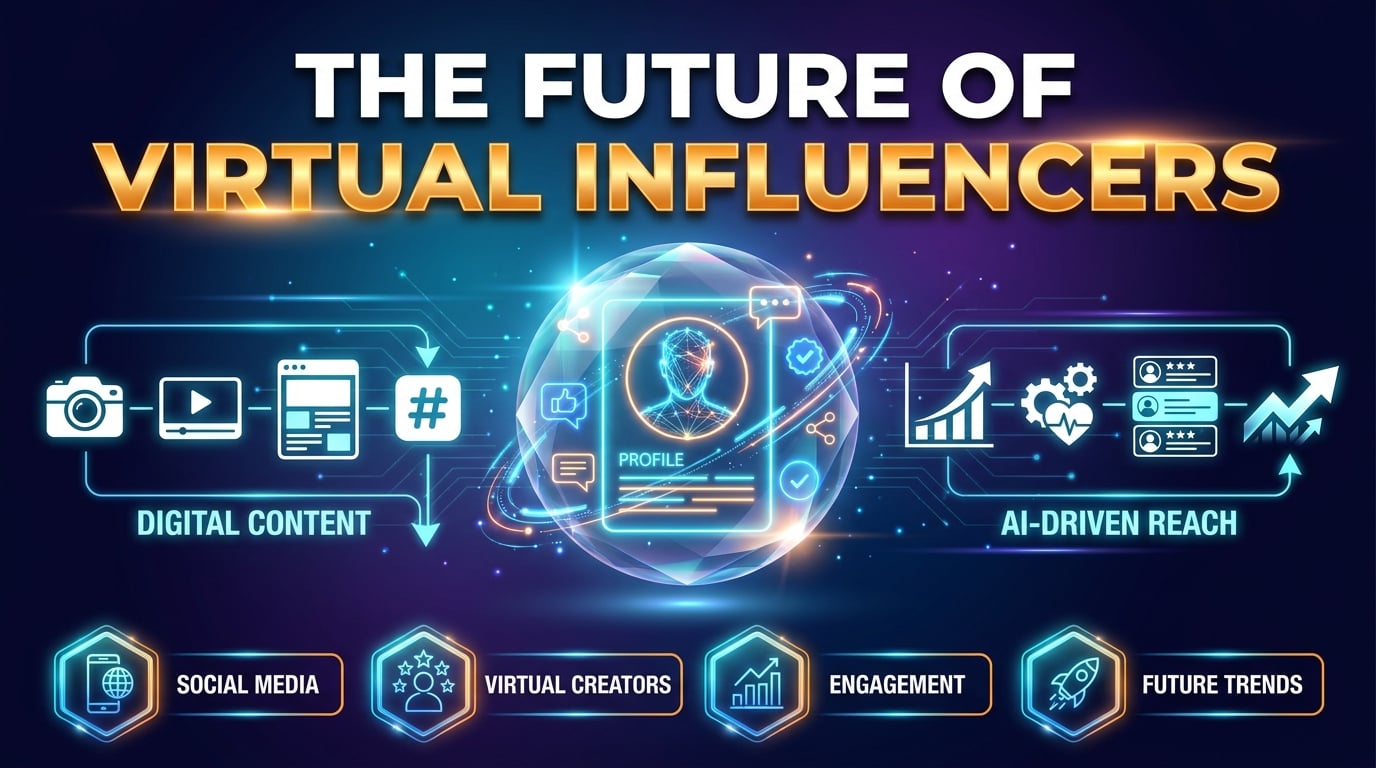
Influencer marketing has evolved into one of the most influential components of modern digital marketing. Social media platforms have transformed the way brands connect with audiences, giving rise to content creators who influence purchasing decisions, trends, and online conversations. However, a new generation of influencers is emerging, one that exists entirely in the digital world.
Virtual influencers are computer-generated personalities designed to engage audiences through social media content, brand collaborations, and interactive experiences. Powered by advancements in artificial intelligence, computer graphics, and digital storytelling, these virtual personalities are becoming increasingly sophisticated and realistic.
As technology continues to evolve, virtual influencers are expected to play a larger role in marketing strategies, content creation, and audience engagement. Understanding this growing trend can help businesses prepare for the future of digital communication.
What Are Virtual Influencers?
Virtual influencers are digital characters created using computer-generated imagery (CGI), artificial intelligence, and animation technologies.
Unlike traditional influencers, they do not exist as real people. Instead, they are carefully-designed personas with unique appearances, personalities, interests, and online identities.
These digital personalities can:
- Publish social media content
- Engage with followers
- Participate in brand campaigns
- Promote products and services
- Share stories and experiences
- Interact through virtual environments
Many virtual influencers have attracted substantial online audiences and continue to gain popularity across multiple social media platforms.
Why Virtual Influencers Are Gaining Attention
Several factors have contributed to the rise of virtual influencers.
Advances in Artificial Intelligence
AI technologies are making digital characters more realistic and interactive.
Modern AI systems can assist with:
- Content creation
- Audience engagement
- Personalised interactions
- Behaviour analysis
- Automated communication
These capabilities allow virtual influencers to provide increasingly-sophisticated experiences.
Growing Interest in Digital Experiences
People are engaging with digital platforms and online experiences more frequently than at any other time in the past.
As online interactions become more immersive, audiences are becoming increasingly comfortable engaging with virtual personalities.
Creative Flexibility
Virtual influencers offer creative possibilities that are difficult to achieve with traditional influencers.
Brands can design characters that align with specific campaign goals, visual styles, and audience preferences.
This level of control creates unique storytelling opportunities.
How Virtual Influencers Are Changing Marketing
Virtual influencers are introducing new approaches to audience engagement and brand communication.
Consistent Brand Representation
Because virtual influencers are entirely digital, businesses can maintain greater consistency in messaging, appearance, and content style.
This can help create a more cohesive brand experience.
Enhanced Storytelling Opportunities
Digital characters can participate in imaginative storylines and experiences that may not be possible in the physical world.
Examples include:
- Virtual events
- Interactive campaigns
- Digital product launches
- Metaverse experiences
- Immersive content series
These opportunities allow brands to create highly-engaging campaigns.
Global Audience Reach
Virtual influencers are not limited by geographic location.
They can engage with audiences around the world and participate in campaigns across multiple markets simultaneously.
This scalability makes them attractive for global marketing initiatives.
The Role of AI in Virtual Influencer Development
Artificial intelligence is becoming an increasingly important component of virtual influencer technology.
AI can support:
Personalised Audience Interactions
Virtual influencers can use AI to respond to comments, engage with followers, and tailor interactions based on audience preferences.
This helps create more personalised experiences.
Content Optimisation
AI can analyse engagement data and identify the types of content that resonate most with audiences.
These insights support more effective content strategies.
Behavioural Learning
Advanced AI systems can learn from audience interactions and adapt communication styles over time.
This creates more natural and engaging digital experiences.
What Makes Virtual Influencers Appealing to Audiences?
Many people wonder why audiences choose to follow virtual personalities.
Why Are Virtual Influencers Becoming Popular?
Several factors contribute to their growing appeal.
These include:
- Unique visual identities
- Creative storytelling
- Interactive experiences
- Technological innovation
- Entertainment value
- Consistent content delivery
For many users, virtual influencers offer something different from traditional social media personalities.
Their novelty and creativity often generate curiosity and engagement.
Challenges Facing Virtual Influencers
Despite their growing popularity, virtual influencers also face several challenges.
Authenticity Concerns
Consumers increasingly value authenticity and transparency.
Some audiences may question whether digital personalities can create genuine connections.
Ethical Considerations
The use of AI-generated characters raises important discussions about:
- Transparency
- Disclosure
- Digital identity
- Audience trust
- Responsible marketing practices
Businesses adopting virtual influencers should carefully consider these factors.
Technology Limitations
Although technology continues to improve, creating realistic and engaging virtual influencers requires significant expertise, resources, and ongoing development.
Not every organisation may have the capacity to invest in these technologies.
Virtual Influencers and the Metaverse
The rise of virtual influencers is closely connected to the growth of immersive digital environments.
As virtual worlds become more sophisticated, digital personalities may play larger roles in:
- Virtual communities
- Interactive events
- Digital commerce
- Gaming experiences
- Virtual customer engagement
The convergence of AI, virtual reality, and digital content creation could significantly expand the opportunities available to virtual influencers.
How Brands Can Prepare for This Trend
Businesses interested in exploring virtual influencer opportunities should begin by understanding how their audiences engage with emerging technologies.
Key considerations include:
- Audience preferences
- Platform suitability
- Brand alignment
- Content strategy
- Long-term objectives
Rather than viewing virtual influencers as a replacement for traditional creators, many businesses may benefit from incorporating them into broader marketing strategies.
Balancing innovation with audience expectations will remain important.
The Future of Influencer Marketing
Influencer marketing is likely to continue evolving as technology advances.
Future developments may include:
- More realistic digital personalities
- AI-powered audience interactions
- Enhanced virtual experiences
- Greater personalisation
- Expanded metaverse integration
These innovations may reshape how brands communicate with audiences and create new forms of digital engagement.
However, the fundamental goal of influencer marketing will remain unchanged: building meaningful connections with audiences.
What Businesses Should Watch in the Coming Years
The virtual influencer landscape is still developing, making it an exciting area to monitor.
Businesses should pay attention to:
- Advances in AI technology
- Consumer attitudes towards virtual personalities
- Emerging social media platforms
- Digital content trends
- Changes in user engagement patterns
Staying informed can help organisations identify opportunities and adapt to evolving marketing environments.
Conclusion
Virtual influencers represent a fascinating intersection of artificial intelligence, digital creativity, and modern marketing. As technology continues to advance, these computer-generated personalities are expected to play a larger role in content creation, audience engagement, and brand storytelling. While challenges surrounding authenticity and transparency remain important considerations, virtual influencers offer exciting opportunities for innovation and creative expression.
Businesses looking to stay ahead of emerging trends should continue exploring how virtual personalities may fit into their broader digital strategies. Whether working with creators, developing new content experiences, or partnering with a social media and digital marketing agency, understanding the future of virtual influencers can help organisations navigate the next phase of digital engagement.
FAQs
How are virtual influencers created?
Virtual influencers are developed using technologies such as computer-generated imagery (CGI), artificial intelligence, animation, and digital design tools.
Why are brands using virtual influencers?
Brands use virtual influencers to explore creative storytelling opportunities, maintain consistent brand representation, and engage audiences through innovative digital experiences.
Will virtual influencers replace human influencers?
Virtual influencers are unlikely to completely replace human influencers. Instead, they are expected to complement traditional influencer marketing by offering additional creative and technological possibilities.