


Social media has evolved far beyond a platform for sharing photos, videos, and updates. Today, it serves as one of the most influential digital marketing channels, connecting businesses with audiences on a global scale. Behind every personalised feed, recommended video, and suggested post is a powerful technology that is transforming the way content is discovered: artificial intelligence.
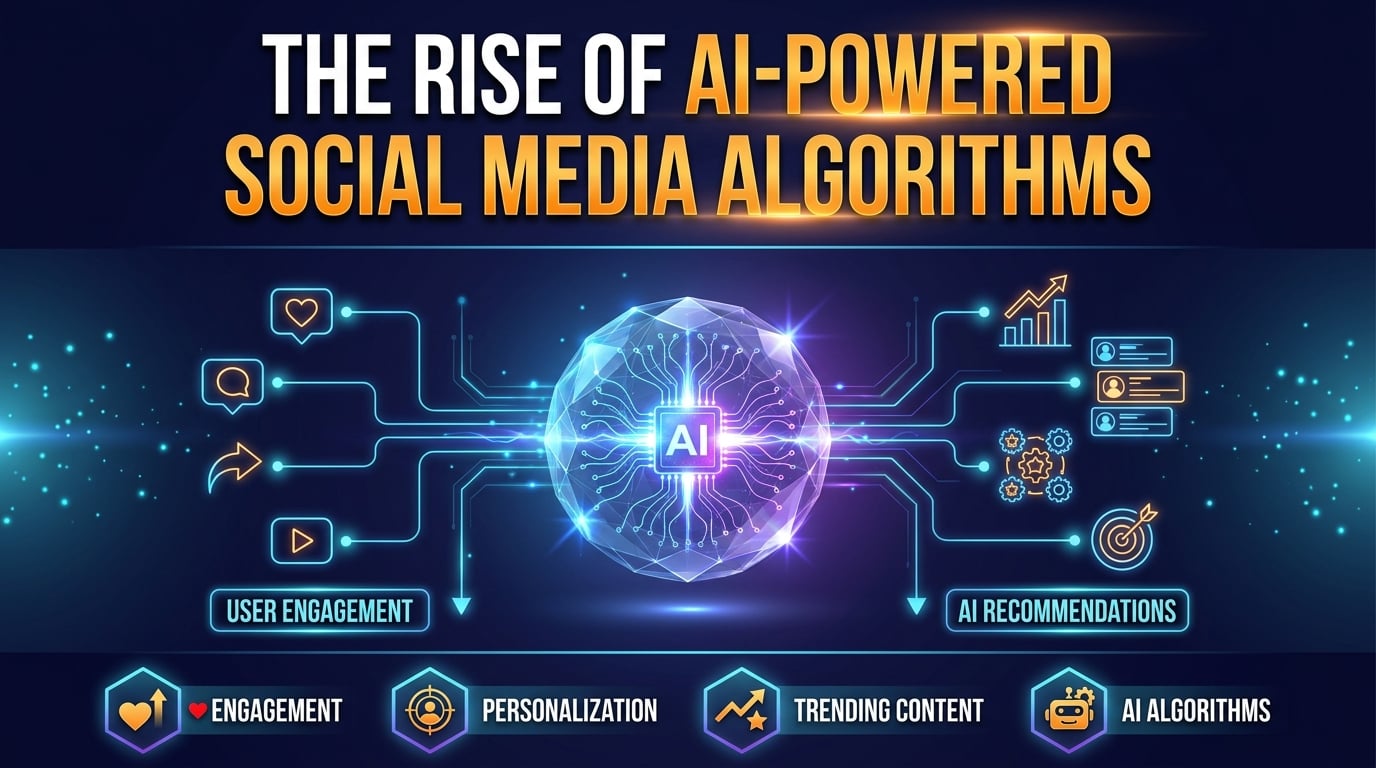
AI-powered social media algorithms have become increasingly sophisticated, enabling platforms to analyse user behaviour, predict preferences, and deliver highly-relevant content. These intelligent systems are changing how brands engage with audiences, how content is distributed, and how marketing strategies are developed.
As artificial intelligence continues to shape social media experiences, understanding the role of AI-powered algorithms has become essential for businesses seeking to improve visibility and engagement online.
Understanding Social Media Algorithms
A social media algorithm is a set of rules and processes used to determine which content appears in a user’s feed.
Rather than displaying posts in simple chronological order, modern platforms use algorithms to prioritise content based on relevance and user interest.
These systems analyse a variety of factors, including:
- User interactions
- Content preferences
- Viewing habits
- Engagement history
- Device usage
- Search behaviour
The goal is to provide users with content they are most likely to find interesting and engaging.
How Artificial Intelligence Powers Modern Algorithms
Artificial intelligence enables social media platforms to process vast amounts of information in real time.
AI systems continuously learn from user activity, allowing them to refine content recommendations and improve personalisation.
Key AI capabilities include:
Behaviour Analysis
AI examines how users interact with content.
This may include:
- Likes
- Comments
- Shares
- Video watch time
- Profile visits
- Content saves
These signals help algorithms understand individual preferences.
Pattern Recognition
Machine learning models identify behavioural patterns across millions of users.
By recognising similarities and trends, platforms can recommend content that aligns with user interests.
Predictive Recommendations
AI can predict which content a user is likely to engage with before they actively search for it.
This helps create highly-personalised social media experiences.
Why Social Media Platforms Rely on AI
The volume of content shared every day is enormous.
Without AI, it would be impossible for platforms to effectively organise and prioritise information for individual users.
AI helps platforms:
- Improve user experiences
- Increase content relevance
- Enhance engagement
- Deliver personalised recommendations
- Reduce content overload
These benefits contribute to longer platform usage and greater user satisfaction.
The Impact of AI on Content Discovery
One of the most significant changes introduced by AI-powered algorithms is how users discover content.
Previously, users primarily saw updates from accounts they followed. Today, algorithms actively recommend content based on interests and engagement patterns.
This means users can discover:
- New creators
- Relevant businesses
- Educational content
- Industry insights
- Trending topics
For brands, this creates new opportunities to reach audiences beyond their existing followers.
How AI Is Changing Social Media Marketing
The rise of AI-powered algorithms has significantly influenced digital marketing strategies.
Businesses must now focus on creating content that aligns with audience interests and platform signals.
Greater Emphasis on Content Quality
Algorithms increasingly prioritise content that encourages meaningful engagement.
Higher-performing content generally demonstrates the following qualities:
- Informative
- Relevant
- Engaging
- Valuable
- Audience-focused
High-quality content is more likely to receive positive engagement signals.
Improved Audience Targeting
AI enables marketers to reach highly-specific audience segments.
Advertising campaigns can be tailored based on factors such as:
- Interests
- Behaviour
- Demographics
- Engagement history
- Purchase intent
This helps improve the relevance of marketing efforts by aligning them with audience needs and interests.
Enhanced Performance Insights
AI-driven analytics help businesses gain a more detailed understanding of how their content performs.
Businesses can evaluate:
- Audience engagement
- Content reach
- Viewing behaviour
- Campaign effectiveness
- User interactions
These insights support better decision-making and strategy development.
What Content Performs Best in AI-Driven Feeds?
This is a common question among marketers and content creators.
How Can Brands Improve Visibility in AI-Powered Feeds?
While every platform uses different ranking factors, certain content characteristics tend to perform well.
These include:
- Authentic storytelling
- Educational content
- Short-form videos
- Interactive posts
- User-focused information
- Visually-engaging formats
Content that encourages genuine engagement often receives greater visibility within algorithm-driven feeds.
The focus should always remain on providing value to the audience.
Personalisation and User Experience
AI-powered algorithms are designed to create personalised experiences for each user.
Instead of showing identical feeds to everyone, platforms customise content based on individual preferences.
Benefits of personalisation include:
- More relevant content
- Improved user satisfaction
- Increased engagement
- Better content discovery
- Enhanced browsing experiences
As personalisation becomes more advanced, users are likely to expect increasingly-tailored experiences.
The Role of AI in Social Media Advertising
Artificial intelligence is also transforming paid social media campaigns.
AI helps advertisers optimise:
Audience Selection
Advanced targeting allows businesses to reach users who are more likely to engage with specific products or services.
Campaign Optimisation
AI can automatically adjust campaign settings based on performance data.
This helps improve efficiency and maximise advertising opportunities.
Ad Relevance
AI analyses user behaviour to deliver advertisements that align with individual interests and preferences.
More relevant advertising often results in stronger engagement.
Challenges Businesses Must Consider
Although AI-powered algorithms offer many advantages, they also present challenges.
Common challenges include:
- Constant algorithm updates
- Increased competition for visibility
- Evolving user preferences
- Growing content saturation
- Greater emphasis on engagement quality
Businesses must remain adaptable and continue refining their strategies as platforms evolve.
Building an Effective Social Media Strategy in the AI Era
Success on social media increasingly depends on understanding how AI-powered algorithms work.
Businesses can improve performance by focusing on:
- Creating valuable content
- Understanding audience interests
- Encouraging meaningful engagement
- Monitoring performance data
- Adapting to platform changes
- Maintaining content consistency
A user-first approach often aligns naturally with the goals of modern social media algorithms.
The Future of AI-Powered Social Media
Artificial intelligence is expected to play an even larger role in shaping social media experiences.
Future developments may include:
- More advanced personalisation
- Smarter content recommendations
- Improved predictive analytics
- Enhanced advertising capabilities
- Greater automation of content delivery
As technology advances, businesses that understand and adapt to these changes will be better positioned to connect with their audiences.
The future of social media is increasingly driven by intelligent systems designed to deliver more relevant, engaging, and personalised experiences.
Conclusion
AI-powered social media algorithms are transforming how content is discovered, distributed, and consumed across digital platforms. By analysing user behaviour and delivering personalised experiences, these systems are reshaping both organic and paid social media strategies.
Businesses that focus on creating valuable content, understanding audience preferences, and adapting to algorithm changes can improve their visibility and engagement in an increasingly-competitive environment. Whether managing campaigns independently or partnering with a social media advertising company, understanding the role of AI-powered algorithms is becoming essential for long-term social media success.
FAQs
How do social media algorithms decide what content to show?
Algorithms evaluate factors such as engagement history, viewing behaviour, content relevance, interests, and user interactions to personalise content recommendations.
Why are AI algorithms important for social media marketing?
They influence content visibility, audience reach, engagement levels, and advertising performance, making them an important factor in social media strategy.
How can businesses improve visibility on social media platforms?
Businesses can improve visibility by creating high-quality content, encouraging engagement, understanding audience preferences, and adapting to evolving platform algorithms.