


The search landscape in 2026 is more intelligent, conversational, and AI-driven than ever before. As generative search engines continue to evolve, businesses are looking beyond traditional optimisation strategies to improve visibility in AI-generated responses. This shift has brought Generative Engine Optimisation (GEO) into the spotlight.
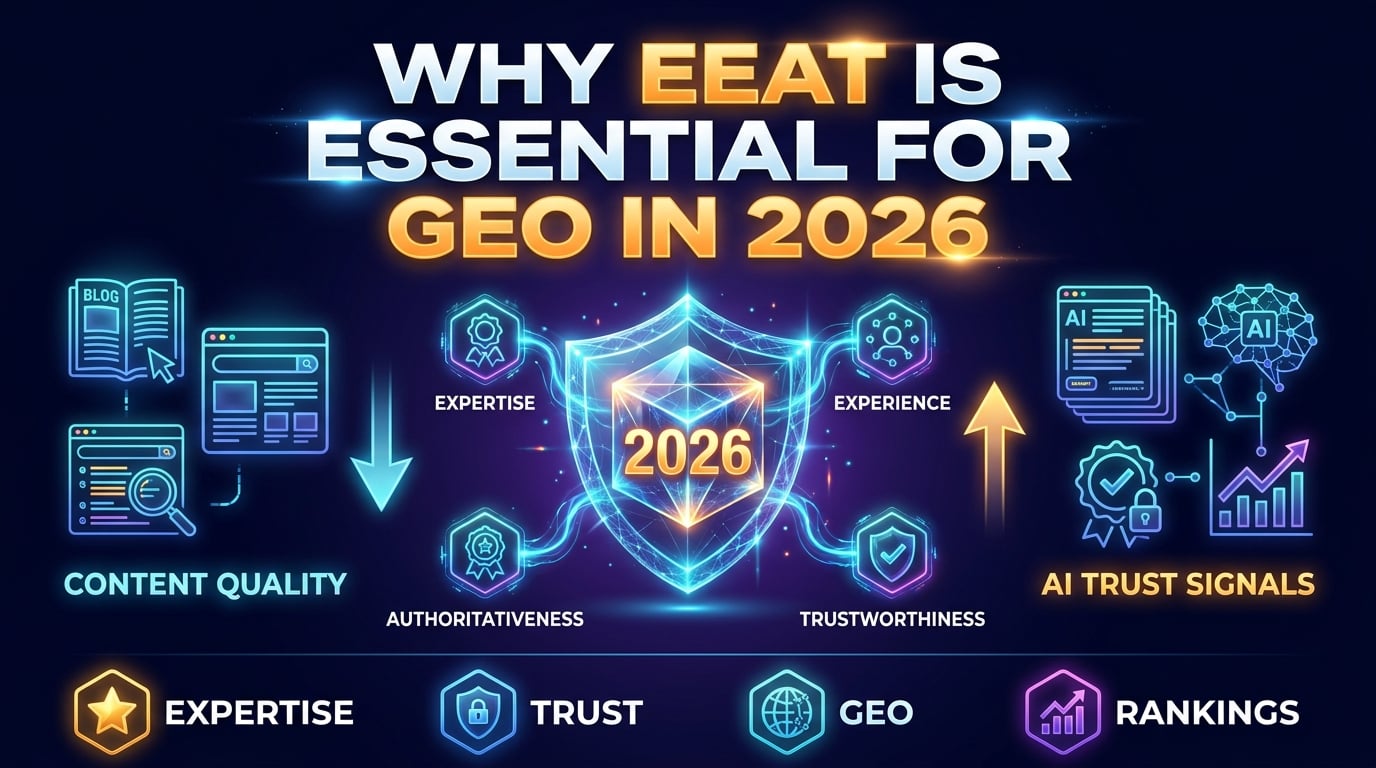
However, simply creating content is no longer enough. AI-powered search systems are increasingly focused on identifying reliable, accurate, and trustworthy sources of information. This is where EEAT — Experience, Expertise, Authoritativeness, and Trustworthiness — plays a critical role.
For businesses aiming to remain visible in search results and AI-generated answers, understanding the connection between EEAT and GEO has become more important than ever.
Understanding EEAT in Modern Search
EEAT is a framework used to evaluate the overall quality and credibility of content.
The four components include:
Experience
Content should reflect real-world knowledge, practical insights, or first-hand understanding of a topic.
Expertise
Information should demonstrate a high level of subject knowledge and accuracy.
Authoritativeness
Websites and content creators should be recognised as reliable sources within their industry or niche.
Trustworthiness
Content must be accurate, transparent, and dependable for users seeking information.
Together, these factors help search systems determine whether a source deserves visibility.
What Is GEO and Why Does It Matter?
Generative Engine Optimisation focuses on improving the likelihood that content will be referenced or utilised by AI-powered search experiences.
Unlike traditional search engines that display a list of links, generative search platforms often create direct answers by analysing information from multiple sources.
Examples include:
- AI-generated summaries
- Conversational search responses
- Answer engines
- Virtual assistants
- AI-powered search overviews
In this environment, content quality becomes even more important because AI systems need confidence in the information they present.
The Growing Relationship Between EEAT and GEO
As AI systems become more advanced, they are getting better at identifying trustworthy sources.
Generative search tools are designed to provide accurate answers, which means they must evaluate:
- Source credibility
- Content reliability
- Topic expertise
- Information accuracy
- User value
EEAT helps provide these signals.
Websites that demonstrate strong EEAT characteristics are more likely to be viewed as dependable information sources, increasing their chances of being referenced in AI-generated results.
Why Trust Has Become a Ranking Factor Beyond Traditional Search
In previous years, ranking success often centred on technical optimisation and keyword relevance. While those elements remain important, AI-powered search experiences place greater emphasis on trust.
Consider the risks associated with inaccurate information. If an AI system presents incorrect advice, misleading data, or unreliable recommendations, user confidence can quickly decline.
To reduce these risks, search technologies increasingly favour content that demonstrates:
- Verifiable information
- Reliable sourcing
- Clear expertise
- Consistent quality
- Transparent communication
Trust is becoming one of the most valuable digital assets for businesses and publishers.
How EEAT Supports Visibility in AI-Generated Responses
Generative AI systems are designed to synthesise information from credible sources.
Content with strong EEAT signals often performs better because it:
- Provides accurate information
- Covers topics comprehensively
- Demonstrates subject expertise
- Aligns with user intent
- Reduces ambiguity
When AI systems evaluate multiple sources on the same topic, content that appears more authoritative and trustworthy may be given greater consideration.
This makes EEAT a foundational element of GEO success.
Key Ways to Strengthen EEAT for GEO
Building a strong EEAT requires a long-term content strategy focused on quality and credibility.
Publish Original Insights
Content that offers unique perspectives and practical knowledge can help demonstrate experience.
Examples include:
- Industry observations
- Real-world examples
- Case-based explanations
- Practical guidance
Original insights often provide more value than generic content.
Develop Deep Topic Coverage
AI systems tend to favour websites that demonstrate expertise across an entire subject area.
Rather than creating isolated articles, build a content ecosystem that explores related topics in depth.
This approach helps establish authority and improves topical relevance.
Maintain Content Accuracy
Outdated or inaccurate information can weaken trust signals.
Regular content reviews can help ensure:
- Statistics remain current
- Information stays relevant
- Industry developments are reflected
- User questions are addressed accurately
Accuracy is essential for both users and AI systems.
Improve Content Clarity
Well-structured content is easier for AI systems to interpret.
Helpful formatting includes:
- Descriptive headings
- Short paragraphs
- Bullet points
- Clear explanations
- Logical organisation
Content that is easy to understand often performs better across multiple search environments.
Why Does User Experience Influence EEAT?
EEAT is not solely about the content itself. The overall website experience also contributes to trust.
Factors that can influence user confidence include:
- Website usability
- Mobile responsiveness
- Fast page loading
- Clear navigation
- Secure browsing environments
A positive user experience reinforces credibility and encourages engagement.
How AI Evaluates Expertise
One of the most significant developments in search technology is the ability of AI systems to assess contextual expertise.
Rather than simply identifying keywords, AI models analyse:
- Topic depth
- Content relationships
- Semantic relevance
- Consistency across content
- Subject matter coverage
This means websites must demonstrate genuine knowledge rather than relying on optimisation shortcuts.
Expertise is increasingly measured through the quality and completeness of information provided.
What Challenges Do Businesses Face in 2026?
Many businesses understand the importance of EEAT but struggle with implementation.
Common challenges include:
- Producing consistent high-quality content
- Standing out in competitive industries
- Maintaining content accuracy over time
- Building authority in emerging niches
- Adapting to evolving AI search technologies
Addressing these challenges requires ongoing effort and a strategic content approach.
Why EEAT Is Becoming a Competitive Advantage
As more businesses invest in AI-focused optimisation, content quality is becoming a key differentiator.
Organisations that prioritise EEAT can benefit from:
- Greater visibility in search results
- Increased credibility with audiences
- Stronger brand reputation
- Better engagement metrics
- Improved opportunities in AI-generated search experiences
The ability to establish trust may become one of the defining factors of online success in the years ahead.
The Future of GEO Will Be Built on Trust
Generative search technologies are expected to continue evolving rapidly. While algorithms and AI models may change, the need for reliable information is unlikely to disappear.
Users will continue seeking:
- Accurate answers
- Expert guidance
- Helpful recommendations
- Trusted sources
As a result, EEAT will remain a critical foundation for GEO strategies.
Businesses that focus on delivering value, expertise, and trustworthy information will be better positioned to thrive in an increasingly AI-driven search ecosystem.
Conclusion
EEAT is no longer just a quality guideline; it has become a vital component of successful GEO strategies in 2026. As AI-powered search experiences place greater emphasis on credibility and reliability, businesses must focus on demonstrating experience, expertise, authoritativeness, and trustworthiness across their content.
By creating valuable resources, maintaining accuracy, and building topical authority, organisations can strengthen their visibility in both traditional and generative search environments. Whether you’re investing in SEO services in Sydney or developing an in-house strategy, prioritising EEAT can help support long-term digital growth in the evolving world of AI search.
FAQs
Does EEAT directly impact search rankings?
While EEAT is not a direct ranking factor, the signals associated with it often contribute to stronger search performance and greater content visibility.
Is topical authority related to EEAT?
Yes. Building topical authority helps demonstrate expertise and authoritativeness, both of which are important components of EEAT.
Will EEAT remain important in the future?
Yes. As AI-powered search continues to evolve, trust, expertise, and content quality are expected to remain essential factors in determining visibility and credibility.