


The digital marketing landscape has experienced significant changes over the past decade. Search engines have evolved from simple keyword-matching tools into sophisticated platforms powered by artificial intelligence, machine learning, and natural language processing. As a result, the strategies that once dominated search engine optimisation are no longer as effective as they used to be.
While traditional SEO remains an important foundation for online visibility, many of its older tactics are losing relevance. Today, Generative Engine Optimisation (GEO) is emerging as a critical approach for businesses looking to remain visible in AI-powered search experiences.
As users increasingly rely on conversational search, AI assistants, and answer engines, GEO is becoming a key part of the future of digital discovery.
Understanding Traditional SEO
Traditional SEO focuses on improving a website’s visibility in search engine results pages through techniques such as:
- Keyword optimisation
- Link building
- Technical website improvements
- Meta tags and descriptions
- Content optimisation
- Internal linking
For many years, these strategies helped websites rank higher and attract organic traffic.
However, search behaviour has changed dramatically. Users are no longer relying solely on traditional search results. Instead, they are turning to AI-driven tools that provide direct answers, recommendations, and summaries without requiring multiple clicks.
This shift is reshaping how information is found online.
Why Modern Search Requires More Than Traditional SEO
Search engines are becoming increasingly focused on understanding context, intent, and meaning rather than simply matching keywords.
In the past, ranking success often depended on targeting specific search terms. Today, AI systems analyse:
- User intent
- Content quality
- Topic relevance
- Contextual relationships
- Authority signals
- Information accuracy
This means businesses can no longer rely on outdated SEO tactics such as keyword stuffing or creating large volumes of low-value content.
Modern search technologies reward websites that genuinely help users solve problems and answer questions.
What Is GEO?
Generative Engine Optimisation (GEO) is the process of optimising content for AI-powered search platforms and answer-generating systems.
Unlike traditional search engines that provide a list of links, generative search technologies often create direct responses by combining information from multiple sources.
Examples include:
- AI-generated search summaries
- Conversational search assistants
- Answer engines
- Virtual assistants
- AI-powered search experiences
GEO focuses on increasing the likelihood that content will be recognised, referenced, and incorporated into these AI-generated responses.
The Shift From Rankings to Visibility
One of the biggest changes in digital search is the growing importance of visibility beyond traditional rankings.
Previously, success was often measured by:
- First-page rankings
- Organic traffic volume
- Click-through rates
While these metrics still matter, businesses must now consider how often their content appears in:
- AI-generated answers
- Search summaries
- Voice search responses
- Conversational search experiences
The goal is no longer just ranking higher. It is becoming a trusted source that AI systems can confidently use when generating answers.
Why GEO Is Becoming More Important
Several developments in digital search are contributing to the growing importance of GEO.
AI Is Changing Search Behaviour
Users are increasingly asking complete questions rather than typing short keyword phrases.
For example, instead of searching for “SEO tips”, users may ask:
- How can I improve website visibility?
- What are the best strategies for AI search?
- Why is my website losing organic traffic?
AI systems are designed to understand and respond to these conversational queries.
Users Want Faster Answers
People expect immediate access to information.
Generative search platforms provide concise responses directly within the search experience, reducing the need to visit multiple websites.
Content Quality Matters More Than Ever
AI systems prioritise information that appears trustworthy, accurate, and helpful.
This places greater emphasis on expertise, authority, and user value.
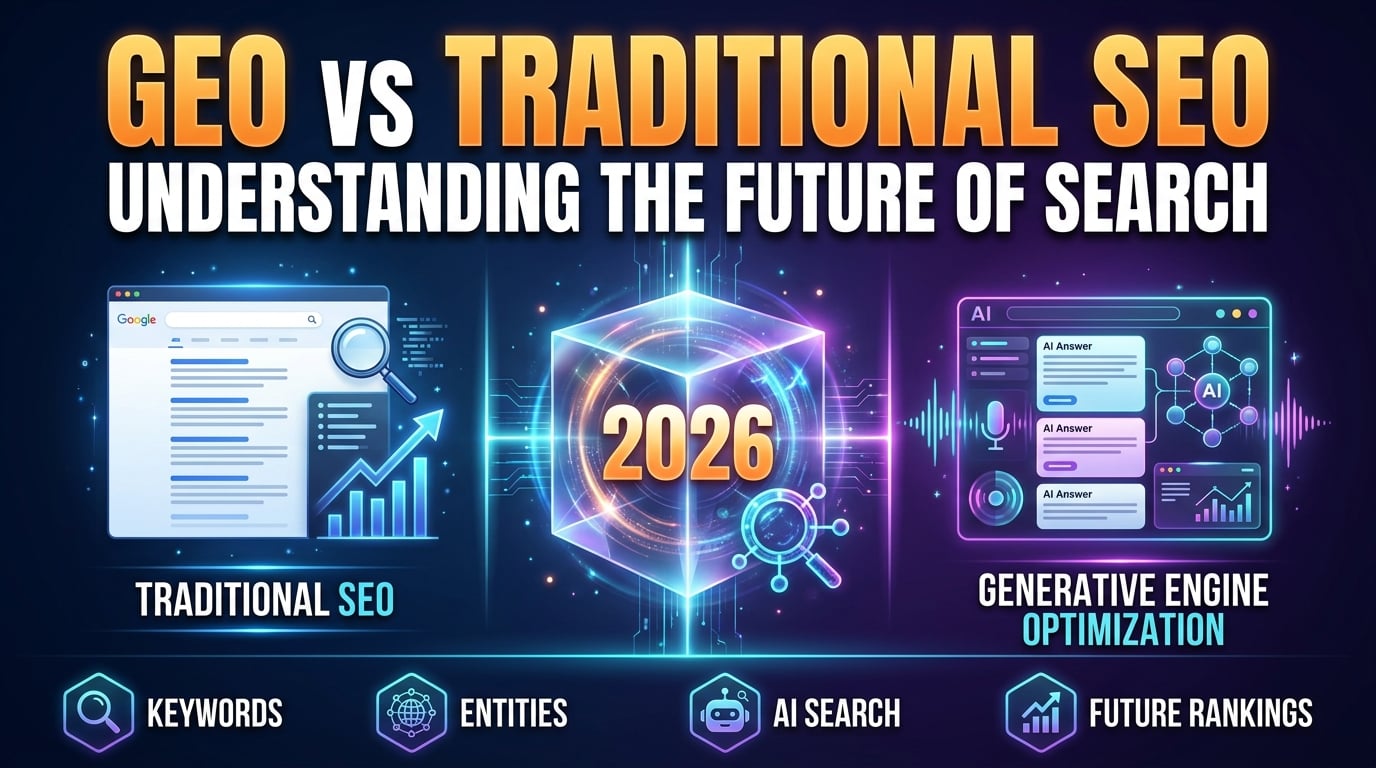
How GEO Differs From Traditional SEO
Although GEO and SEO share similar goals, their approaches differ in several important ways.
| Traditional SEO | GEO |
| Focuses on rankings | Focuses on AI visibility |
| Optimises for search results pages | Optimises for AI-generated answers |
| Relies heavily on keywords | Prioritises context and meaning |
| Measures clicks and traffic | Measures discoverability and authority |
| Targets search engines | Targets AI systems and users |
The most effective digital strategies now combine both approaches rather than treating them as separate disciplines.
What Makes Content GEO-Friendly?
To improve visibility within AI-generated search experiences, content should possess several key characteristics.
Comprehensive Topic Coverage
AI systems often favour content that provides complete and detailed information.
Rather than creating shallow articles, focus on covering subjects thoroughly and addressing related topics.
Strong Topical Authority
Websites that consistently publish content within a specific niche are often viewed as more reliable sources.
Topical authority helps establish expertise and trust.
Clear Content Structure
Organised content is easier for both users and AI systems to understand.
Helpful formatting includes:
- Descriptive headings
- Bullet points
- Short paragraphs
- Question-and-answer sections
- Logical information flow
Accurate and Current Information
Outdated content can reduce credibility.
Regularly reviewing and updating information helps maintain relevance and trustworthiness.
Are Keywords Still Important?
This is a question many marketers are asking.
Do Keywords Still Matter in GEO?
Yes, but their role has changed.
Keywords remain useful because they help identify user interests and search intent. However, modern optimisation focuses less on exact-match keyword repetition and more on semantic relevance.
AI systems understand:
- Related concepts
- Synonyms
- User intent
- Topic relationships
As a result, content should be written naturally while addressing the broader context surrounding a topic.
Building a Future-Proof Search Strategy
Businesses that want to remain competitive should focus on creating content that serves both traditional search engines and AI-powered systems.
Practical steps include:
- Producing valuable educational content
- Building topical authority
- Improving content quality
- Strengthening internal linking
- Addressing user questions directly
- Optimising for conversational search
- Updating content regularly
This balanced approach helps improve visibility across multiple search environments.
Why Trust Will Define Future Search Success
One of the most significant developments in AI-driven search is the increasing importance of trust.
AI systems aim to provide reliable answers, which means they are more likely to reference content that demonstrates:
- Expertise
- Accuracy
- Authority
- User value
- Consistency
Businesses that prioritise these qualities are more likely to remain visible as search technology continues to evolve.
The Future Belongs to GEO and SEO Together
Despite claims that SEO is dead, the reality is more nuanced. Traditional SEO remains an essential foundation for website performance, discoverability, and user experience.
However, the rise of generative search means that optimisation strategies must evolve. GEO represents the next stage of search visibility, helping businesses connect with users through AI-powered experiences.
The future is not about choosing between SEO and GEO. It is about combining the strengths of both to create content that serves users wherever they search.
Conclusion
Traditional SEO is no longer the complete solution it once was. As AI-powered search experiences become more common, businesses must adapt their strategies to remain visible and relevant. GEO focuses on helping content become discoverable within AI-generated answers, conversational search, and emerging answer engines.
By prioritising content quality, authority, user intent, and contextual relevance, organisations can prepare for the next era of digital search. Whether working independently or partnering with an SEO agency in Sydney, embracing GEO alongside modern SEO practices can help businesses stay competitive in an increasingly AI-driven world.
FAQs
Why is GEO important for the future of search?
GEO helps businesses improve visibility within AI-generated answers, conversational search experiences, and emerging answer engines that are changing how users discover information.
Can businesses use SEO and GEO together?
Yes. The most effective approach is to combine strong SEO foundations with GEO-focused content strategies to maximise visibility across traditional and AI-powered search environments.
Will EEAT remain important in the future?
Yes. As AI-powered search continues to evolve, trust, expertise, and content quality are expected to remain essential factors in determining visibility and credibility.