


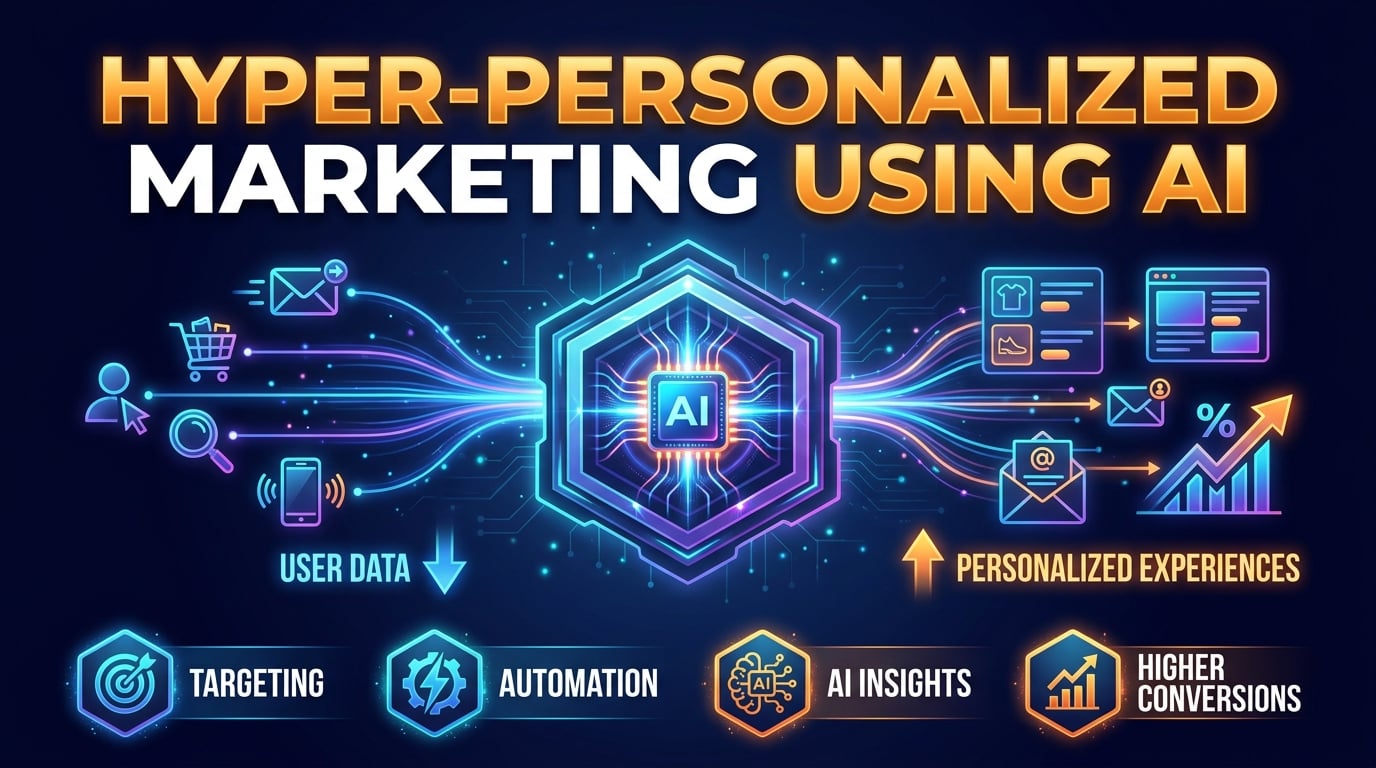
With digital channels becoming increasingly crowded, consumers are faced with countless marketing messages every day. With so much competition for attention, generic campaigns often struggle to create meaningful engagement. Today’s audiences expect brands to understand their interests, preferences, and needs, making personalisation more important than ever.
This is where hyper-personalised marketing powered by artificial intelligence (AI) is transforming the digital landscape. By analysing large volumes of customer data and identifying behavioural patterns, AI enables businesses to deliver highly relevant experiences tailored to individual users.
As technology continues to evolve, hyper-personalisation is becoming a key strategy for businesses looking to strengthen customer relationships, improve engagement, and create more effective marketing campaigns.
What Is Hyper-Personalised Marketing?
Hyper-personalised marketing is an advanced form of personalisation that uses real-time data, artificial intelligence, and predictive analytics to deliver highly-relevant content, offers, and experiences to individual users.
Unlike traditional personalisation, which may simply include a customer’s name in an email, hyper-personalisation considers a wider range of factors like
- Browsing behaviour
- Purchase history
- Search activity
- Content preferences
- Device usage
- Location data
- Engagement patterns
This deeper understanding allows businesses to create experiences that feel more relevant and timely.
Why Consumer Expectations Are Changing
Today’s consumers expect brands to provide experiences that match their interests and needs.
Several factors are driving this shift:
- Increased digital interactions
- Greater access to information
- Growing demand for convenience
- More personalised online experiences
- Rising competition among businesses
As a result, customers are more likely to engage with brands that provide relevant content rather than broad, one-size-fits-all messaging.
Businesses that understand these expectations can create stronger connections with their audiences.
How AI Powers Hyper-Personalisation
Artificial intelligence plays a central role in delivering personalised experiences at scale.
AI can process enormous amounts of data far more efficiently than manual analysis, helping businesses identify patterns and opportunities that may otherwise go unnoticed.
Real-Time Data Analysis
AI systems can analyse customer interactions as they happen.
This allows businesses to respond quickly to changing behaviours and preferences.
Examples include:
- Product recommendations
- Personalised content suggestions
- Dynamic website experiences
- Tailored advertising messages
Real-time insights help ensure marketing remains relevant and timely.
Predictive Customer Insights
AI can identify trends and predict future behaviour based on historical data.
This enables businesses to anticipate customer needs and deliver relevant experiences before users actively seek them.
Predictive capabilities may help businesses understand:
- Potential purchasing behaviour
- Content interests
- Engagement likelihood
- Customer preferences
These insights support more informed marketing decisions.
Audience Segmentation at Scale
Traditional audience segmentation often relies on broad demographic categories.
AI allows businesses to create highly-detailed audience segments based on behavioural and contextual data.
This helps marketers deliver more relevant messaging to specific groups of users.
The Benefits of Hyper-Personalised Marketing
Businesses across various industries are adopting hyper-personalisation because of its potential to improve customer experiences and marketing effectiveness.
Key benefits include:
Stronger Customer Engagement
Content that aligns with user interests is more likely to attract attention and drive engagement.
When users receive information aligned with their interests, engagement often improves naturally.
Improved Customer Experiences
Personalised experiences can make interactions feel more useful and valuable.
Customers appreciate content that reflects their preferences and needs.
Better Marketing Efficiency
AI helps reduce wasted marketing efforts by ensuring messages are delivered to the most relevant audiences.
This allows businesses to focus resources more effectively.
Increased Customer Loyalty
Consistently-relevant experiences can help strengthen customer relationships over time.
When customers feel understood, they are often more likely to continue engaging with a brand.
How Hyper-Personalisation Is Used Across Marketing Channels
AI-driven personalisation can be applied across multiple digital marketing channels.
Email Marketing
AI can personalise:
- Subject lines
- Content recommendations
- Product suggestions
- Send times
- User-specific messaging
This helps create more relevant email experiences.
Social Media Marketing
AI can analyse user behaviour and engagement patterns to support more targeted content strategies.
Businesses may use AI to:
- Identify audience interests
- Recommend content topics
- Improve ad targeting
- Optimise posting schedules
These insights can contribute to stronger social media performance.
Website Experiences
Websites can adapt content dynamically based on visitor behaviour.
Examples include:
- Personalised recommendations
- Tailored landing pages
- Relevant content displays
- Behaviour-based messaging
This helps create a more engaging browsing experience.
Paid Advertising
AI enhances advertising campaigns by improving:
- Audience targeting
- Ad relevance
- Bid management
- Campaign optimisation
More precise targeting often leads to more meaningful customer interactions.
What Makes Hyper-Personalisation Different From Traditional Marketing?
Many businesses ask an important question:
Why Is Hyper-Personalisation More Effective Than Traditional Marketing?
Traditional marketing typically delivers the same message to large groups of people.
Hyper-personalisation takes a more individualised approach.
Instead of relying solely on demographics, it considers:
- Behavioural signals
- User intent
- Real-time interactions
- Historical engagement
- Predictive insights
This creates marketing experiences that are significantly more relevant to each user.
The result is often stronger engagement and a more personalised customer journey.
Challenges Businesses Should Consider
While hyper-personalisation offers many advantages, it also requires careful planning and implementation.
Common challenges include:
- Managing large volumes of data
- Maintaining data quality
- Balancing automation with human oversight
- Keeping personalisation relevant
- Adapting to evolving customer expectations
Businesses should focus on using AI responsibly while ensuring customer experiences remain helpful and meaningful.
The Importance of Human Creativity
Although AI is highly effective at analysing data and identifying patterns, human creativity remains essential.
Successful hyper-personalised marketing combines:
- Data-driven insights
- Strategic thinking
- Creative storytelling
- Brand consistency
- Customer understanding
AI can support decision-making, but human expertise helps create authentic and engaging marketing experiences.
The strongest marketing strategies often emerge from the collaboration between technology and creativity.
Future Trends in Hyper-Personalised Marketing
As AI technology continues to advance, personalisation capabilities are expected to become even more sophisticated.
Emerging trends may include:
- More advanced predictive analytics
- Real-time content customisation
- Enhanced conversational experiences
- Greater automation of customer journeys
- Smarter audience insights
Businesses that stay informed about these developments can better adapt to changing consumer expectations.
The Future of Marketing Is Personal
Consumers increasingly expect brands to understand their preferences and provide relevant experiences across every touchpoint.
Hyper-personalised marketing allows businesses to move beyond generic messaging and create more meaningful interactions.
By combining AI-driven insights with strong marketing strategies, businesses can deliver experiences that are more engaging, valuable, and relevant to their audiences.
As competition continues to grow, personalisation is likely to remain a major focus for digital marketers seeking to build stronger customer relationships.
Conclusion
Hyper-personalised marketing is transforming how businesses connect with their audiences by using AI to deliver highly relevant and timely experiences. From personalised website interactions and targeted advertising to customised email campaigns and social media strategies, AI helps marketers better understand customer behaviour and preferences. While technology plays a significant role, the most effective campaigns still rely on human creativity and strategic thinking.
Businesses that embrace hyper-personalisation can create stronger customer experiences and improve engagement in an increasingly competitive digital environment. Whether managing campaigns internally or partnering with a social media agency in Sydney, leveraging AI-driven personalisation can help businesses stay relevant and responsive to evolving consumer expectations.
FAQs
How does AI support hyper-personalisation?
AI analyses customer behaviour, preferences, and engagement patterns to help businesses deliver more relevant marketing messages and experiences.
Which marketing channels can benefit from hyper-personalisation?
Hyper-personalisation can be applied across websites, email marketing, social media, paid advertising, and other digital marketing channels.
Why is hyper-personalisation important for businesses?
It helps create more relevant customer experiences, improve engagement, strengthen customer relationships, and support more effective marketing strategies.